In ecological restoration, pollinator conservation, and native plant landscaping, propagating indigenous perennial wildflowers from botanical seed is the single most effective method for establishing self-sustaining biodiverse habitats. Species such as showy milkweed (Asclepias speciosa) and common milkweed (Asclepias syriaca), pale purple coneflower (Echinacea pallida), wild columbine (Aquilegia canadensis), and blazing star (Liatris spicata) provide indispensable nectar corridors for native bumblebees, solitary sweat bees, and monarch butterflies (Danaus plexippus).
However, native wildflower seeds cannot be treated like domesticated annual petunias or marigolds. Through millions of years of evolutionary adaptation to temperate, continental, and prairie winters, native wildflower seeds possess robust physiological morphodormancy. If a milkweed seed were to germinate during a warm Indian summer in October, the tender green seedling would be pulverized by the first November freeze. Overcoming this natural survival lock requires replicating the biological winter cycle through moist cold stratification or outdoor winter sowing.
🌱 The Milkweed-Monarch Co-Evolutionary Bond
Milkweed seeds are equipped with silky, aerodynamic pappus fibers (floss) designed for wind dispersal. Within each seed pod, the seeds are packed with cardenolides (toxic cardiac glycosides) synthesized by the mother plant. When monarch caterpillars feed on the resulting seedlings, they sequester these cardenolides into their own bodies, rendering both caterpillars and adult butterflies unpalatable and toxic to predatory birds—a vital defense mechanism that begins directly within the maternal seed coat.
Moist Cold Stratification Parameters for Indigenous Wildflowers
Different native wildflower taxa have evolved distinct cumulative winter chilling requirements reflecting their geographic ranges:
| Wildflower Botanical Taxon | Common Species Name | Stratification Chill Requirement | Germination Light Sensitivity (Photoblastism) |
|---|---|---|---|
| Asclepias tuberosa | Butterfly Weed / Orange Milkweed | 30 days cold moist chilling at 2°C – 4°C. | Light required; surface sow or cover < 2 mm. |
| Asclepias syriaca | Common Milkweed | 30 to 60 days cold moist chilling at 3°C. | Light beneficial; shallow 3 mm covering. |
| Aquilegia canadensis | Eastern Red Columbine | 60 days cold moist chilling at 2°C – 4°C. | Obligate Photoblastic: strictly surface sow (requires light). |
| Liatris spicata | Dense Blazing Star / Gayfeather | 60 days cold moist chilling at 3°C. | Light neutral; sow 5 mm deep. |
| Ratibida pinnata | Yellow Prairie Coneflower | 30 days cold moist chilling at 4°C. | Light required; press firmly into surface. |
The Outdoor Milk-Jug ‘Winter Sowing’ Technique
For home gardeners and restorationists lacking laboratory refrigeration space, the winter sowing method utilizing recycled translucent plastic milk jugs provides an ingenious, low-cost alternative. In mid-winter (December to February):
- Clean 4-liter plastic milk jugs are perforated with drainage holes at the base and sliced horizontally around the equator, leaving a small plastic hinge handle.
- Fill the bottom half with 8 to 10 cm of pre-moistened, sterile potting substrate; sow native seeds across the surface according to their light requirements.
- Seal the equator closed with waterproof duct tape, discard the cap (leaving the open spout for natural rain and snow entry), and set the jugs outdoors in a full-sun location.
Throughout winter, the seeds undergo natural freeze-thaw cycles, snowmelt saturation, and micro-climatic chilling. As spring temperatures warm, the mini-greenhouses warm up, triggering naturally hardened, vigorous germination without supplemental indoor grow lights or seedling damping-off.
Pappus Coma Aerodynamics and Floss Extraction in Milkweed
In the genus Asclepias (milkweeds), each mature follicle pod splits open along a single longitudinal suture to expose dozens of flat, brown, tear-drop-shaped seeds. Each seed is capped by a tuft of hundreds of silky, hollow fibers termed the coma (pappus floss). Composed of pure cellulose with hollow lumens filled with air, the coma fibers act as microscopic parachutes, providing immense aerodynamic drag that enables wind dispersal over miles of prairie terrain.
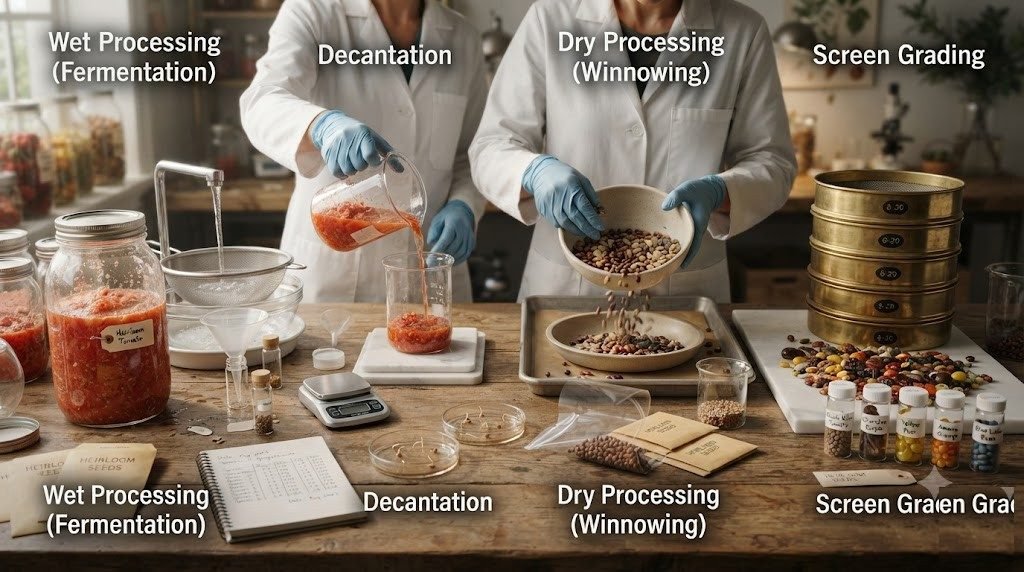
For seed banking, separating thousands of seeds from their airborne floss without sending clouds of silky fibers billowing through the seed room requires a simple, ingenious mechanical technique: the vacuum-and-mesh box method or the paper bag shake:
- Harvest pods the moment the suture line cracks open, while the white floss fibers are still compressed into a tight, golden-brown cone.
- Grasp the silk tip with one hand and strip the seeds downward with the other; the seeds pop off cleanly into a bowl in seconds before the floss expands.
- If pods have already fluffed open, place seeds and silk inside a paper grocery bag with several clean rubber bouncy balls and shake vigorously: the balls strip seeds to the bottom of the bag, allowing the tangled silk mass to be lifted out in one piece.
🌱 Prairie Fire Ecology: Smoke Water and Pyrogenic Germination
Many native North American prairie wildflowers (including certain Echinacea, Liatris, and native grasses) co-evolved with periodic prairie wildfires. In addition to cold stratification, these seeds respond dramatically to chemical compounds found in wood smoke—specifically karrikins (KAR1). When smoke water dissolves into the soil, karrikins bind to KAI2 receptor proteins in the seed, up-regulating gibberellin synthesis and stimulating rapid germination across fire-cleared soil beds.
The Physical Mechanics of Winter Sowing in Plastic Jugs
The outdoor winter sowing method mimics natural prairie soil cycles through micro-environmental physics. The translucent plastic jug functions as a miniature passive solar greenhouse:
- During sub-freezing winter nights, the soil within the jug freezes solid, satisfying the seed’s cumulative cold stratification requirements (2°C – 4°C).
- During sunny winter afternoons, solar radiation penetrates the plastic, warming the interior substrate by 5°C to 8°C above ambient air, creating natural freeze-thaw cycles that mechanically fissure the seed coats.
- The open jug spout allows natural snow and rain to enter continuously, maintaining constant capillary hydration without waterlogging (excess water drains freely through base holes).
- When spring arrives, seeds germinate 2 to 3 weeks earlier than open-ground seeds, emerging as stocky, naturally hardened seedlings with zero transplant shock.
Ornamental Seed Certification, Germination Standards, and Ecotype Genetics
The production, grading, and marketing of ornamental flower seeds encompass both highly refined F1 hybrid commercial cut-flower crops and regionally wild-collected native wildflower species. Commercial flower seed certification is guided by the Association of Official Seed Analysts (AOSA) and the Federal Seed Act, which mandate accurate labeling of pure seed percentage, inert matter (such as flower petal chaff or pappus silk), other crop seed, and germination test dates. In native wildflower propagation, seed standards place primary emphasis on genetic ecotype provenance—certifying that seed stocks originate from locally adapted wild populations within a defined geographic ecoregion (typically within 150 to 300 kilometers) to ensure ecological fitness with local soils, rainfall patterns, and native pollinator communities.
Seed laboratories classify ornamental flower seeds into three functional propagation categories:
- Standard Raw Seed: Cleaned, unpelleted seeds evaluated under standard blotter paper or rolled-towel germination tests per AOSA protocols.
- Precision Pelleted Seed: Micro-seeds (petunias, snapdragons, begonias) coated with dissolvable inert clay binders to standardize physical dimensions for automated vacuum drum mechanical transplanters.
- Primed Flower Seed: High-value seeds subjected to osmotic solution hydration (PEG priming) to initiate early metabolic Phase I and Phase II repair before drying, ensuring ultra-fast, synchronized field emergence within 48 to 72 hours of planting.
Wildflower Harvest Ethics and Conservation Biosecurity
In wild native seed collection, seed conservationists adhere strictly to the 1 in 20 Rule formulated by the Center for Plant Conservation (CPC) and the Kew Millennium Seed Bank. Collectors never harvest more than 5% to 10% of the mature seeds from any wild plant population in a single season, ensuring that the vast majority of seed falls naturally to regenerate the local habitat, nourish wild granivorous birds, and sustain the wild soil seed bank.
| Ornamental Flower Category | Primary Seed Quality Constraint | Standard Testing Methodology | Quality Benchmark |
|---|---|---|---|
| Native Prairie Wildflowers | High dormant seed fraction (morphophysiological). | Pre-chilled blotter test (30-day cold chill) + Tetrazolium assay. | Viability ≥ 75% (reported as % Germinated + % Hard Dormant). |
| Annual Cut Flowers (Zinnia/Cosmos) | Inert chaff contamination and hollow hulls. | Purity analysis + Air-column aspiration blower. | Pure seed ≥ 98%; germination capacity ≥ 85%. |
| Hard-Coated Ornamentals (Lupine) | Physical testa dormancy (water-impermeable). | Pre-scarified blotter test with 24-hr imbibition tracking. | Swollen seed imbibition ≥ 90% within 24 hours. |
| Dust-Seeded Flowers (Petunia/Foxglove) | Microscopic size; obligate light requirement. | Surface blotter assay under continuous 16-hr light at 22°C. | Germination ≥ 85%; pelleted seed dissolution < 30 seconds. |
Technical Frequently Asked Questions (FAQ)
What is the difference between ray floret seeds and disc floret seeds in zinnias?
A zinnia blossom is a composite flower head containing two distinct flower types: sterile or pistillate ray florets (which form the colorful outer petals) and bisexual disc florets (which form the tight central cone). Seeds harvested from ray florets are broad, shield-shaped, and rough, whereas seeds from disc florets are narrow, lanceolate, and dark. In double-flowered heirloom zinnias, ray floret seeds consistently produce a significantly higher percentage of fully double, densely petaled blooms, whereas disc floret seeds tend to revert to single or semi-double wild flower forms. Discerning flower farmers separate and sow ray floret seeds to maximize high-value double blooms.
How does mechanical scarification unlock germination in hard morning glory seeds?
Morning glory (Ipomoea spp.) and sweet pea (Lathyrus spp.) seeds have an outer seed coat (testa) sealed by a dense layer of wax-coated palisade sclereid cells (the Malpighian layer) that forms an absolute physical barrier to water and oxygen. Sowing unscarified seeds into moist soil often results in zero water absorption for months. Mechanical scarification—nicking the seed coat with a razor blade or rubbing seeds between sheets of sandpaper—physically ruptures this palisade barrier, allowing water to rush into the embryo via matric suction, causing the seed to swell to double its size and trigger radicle emergence in 48 to 72 hours.
Why must petunia and snapdragon seeds be sown strictly on the soil surface?
Petunia, snapdragon, and foxglove seeds are microscopic ‘dust seeds’ containing virtually zero stored endosperm carbohydrate reserves. If buried beneath even 2 millimeters of soil, the embryo lacks the energy reserves to push a shoot upward to the surface in darkness. Furthermore, these species are positively photoblastic: their internal germination biochemistry is activated by red light wavelengths detected by phytochrome photoreceptors. Direct light exposure triggers the synthesis of gibberellins that drive germination; darkness enforces permanent dormancy.
How does the outdoor winter sowing method work for native perennial wildflowers?
Winter sowing utilizes recycled translucent plastic milk jugs as passive solar mini-greenhouses set outdoors in mid-winter. Seeds are sown inside the moist soil of the jug, which is perforated for drainage and rain entry. During sub-zero winter nights, the soil freezes solid, fulfilling the seed’s cumulative cold moist stratification requirements (typically 30 to 60 days below 4°C). On sunny winter days, the jug warms up, creating natural freeze-thaw cycles that crack seed coats. When spring arrives, the mini-greenhouse warms, triggering early, robust germination of naturally cold-hardened seedlings that suffer zero transplant shock.
Mycorrhizal Fungal Inoculation and Prairie Soil Biome Integration
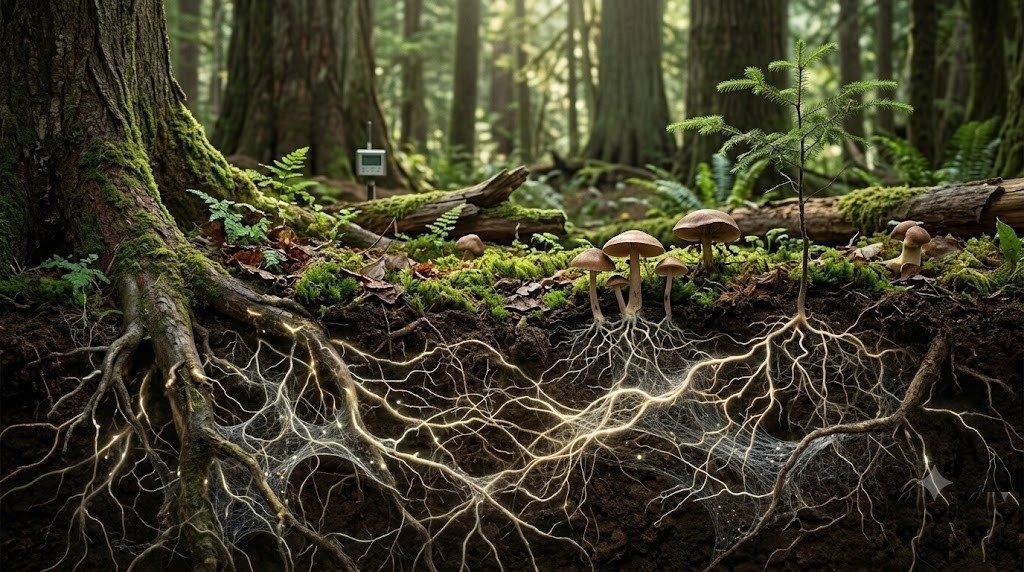
In native tallgrass and shortgrass prairie ecosystems, perennial wildflowers do not grow in sterile potting soil; they thrive within a dense, living underground network of arbuscular mycorrhizal fungi (AMF), predominantly from the genera Glomus and Rhizophagus. These microscopic fungal hyphae penetrate the cortical cells of wildflower root tips, forming branched arbuscules that exchange soil-bound phosphorus, zinc, and moisture for plant sugars.
When propagating native wildflower seeds in sterile indoor seed flats, seedlings lack these essential fungal partners. Ecological restorationists blend a small handful of native forest or prairie soil (or commercial AMF endomycorrhizal inoculant) into the seed-starting mix. Inoculated milkweed and coneflower seedlings develop 300% more root mass, exhibit intense anthocyanin drought pigments, and establish with near 100% survival when transplanted into harsh, unwatered field restoration sites.
Genetic Provenance and Local Ecotypic Adaptation
When saving and exchanging native wildflower seeds, seed stewards prioritize local ecotypes. An Asclepias syriaca (common milkweed) plant native to the cold, humid climate of upstate New York possesses distinct epigenetic adaptations and cold-hardiness genes compared to a common milkweed population adapted to the hot, semi-arid plains of Kansas. Preserving and propagating localized ecotypes safeguards the fine-tuned evolutionary relationship between native plants and regional climate rhythms.
Establishing community native seed gardens creates vital ecological stepping stones across fragmented urban landscapes, supporting migrating monarch butterfly flyways and solitary native bee populations. By collecting and dispersing diverse local ecotypes, conservationists rebuild complex ecological trophic webs that stabilize degraded soils, improve groundwater recharge, and restore natural biodiversity.