Long-Term Seed Banking Science: Equilibrium Moisture Content, Harrington’s Rule, and Hermetic Cold Storage

From the world’s premier crop conservation vault—the Svalbard Global Seed Vault buried deep inside Arctic permafrost—to a small mason jar resting inside a backyard homesteader’s freezer, the underlying scientific principles of long-term seed preservation remain fundamentally identical. The objective of seed banking is to slow down the relentless thermodynamic and biochemical processes of cellular aging, … Read more
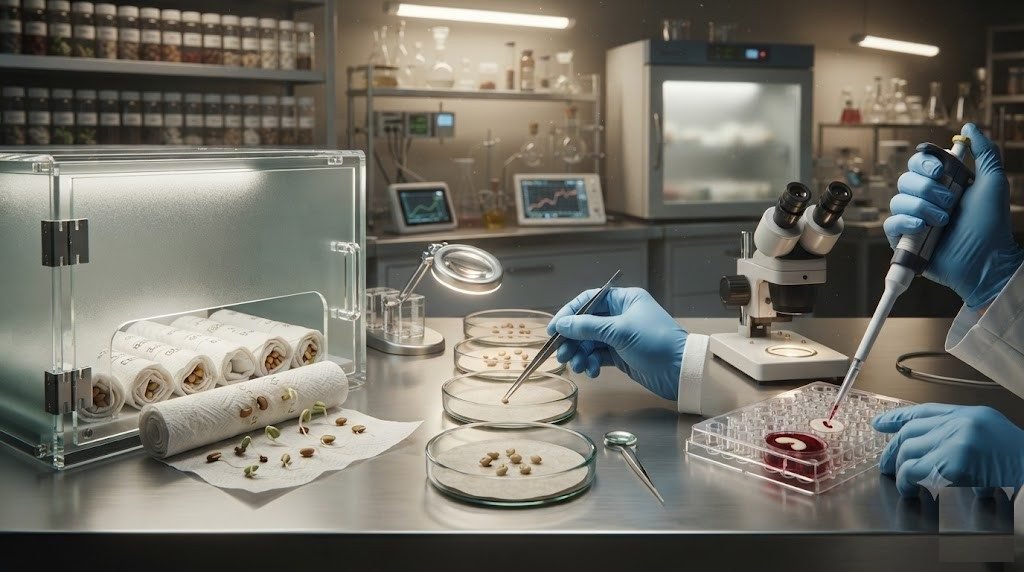
Seed Viability Testing Protocols: The Ragdoll Paper Towel Test, Blotters, and Tetrazolium Assays

Before committing valuable labor, greenhouse bench space, organic compost, and field acreage to sowing a batch of stored seeds, agriculturalists and seed bank curators must answer a vital question: What percentage of these seeds are alive and capable of producing vigorous, healthy seedlings? Relying on unverified, old seed packets can result in catastrophic stand failures, … Read more

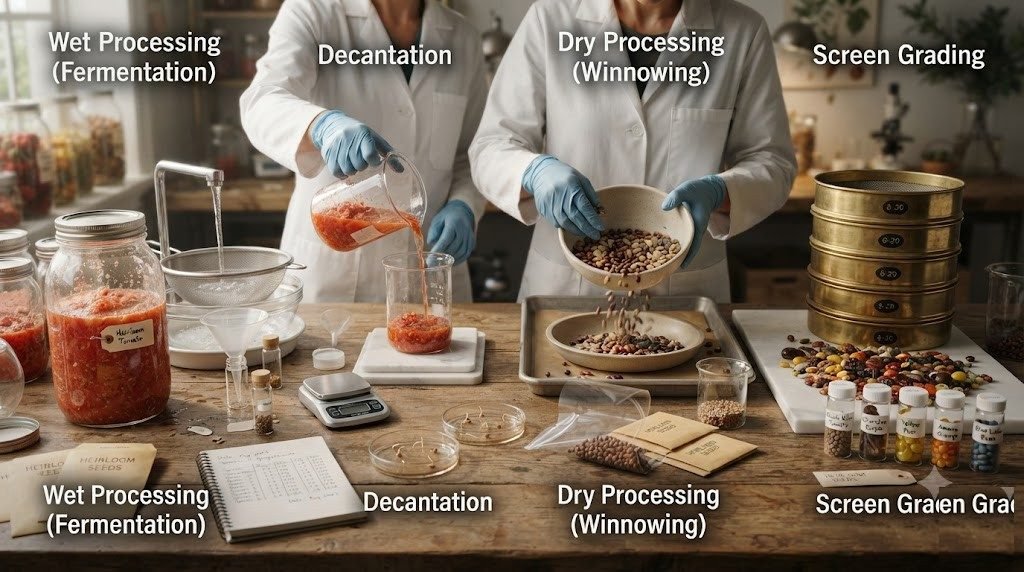
Wet vs. Dry Seed Processing: Fermentation, Decantation, Winnowing, and Screen Grading

In seed banking, commercial seed production, and community seed saving, harvesting botanical seeds from the mother plant is only the first phase of seed stewardship. Raw seed collections arriving from the garden or field are contaminated with plant chaff, dried husks, dirt particles, weed seeds, insect frass, and hollow unfertilized seed coats. Furthermore, seeds born … Read more

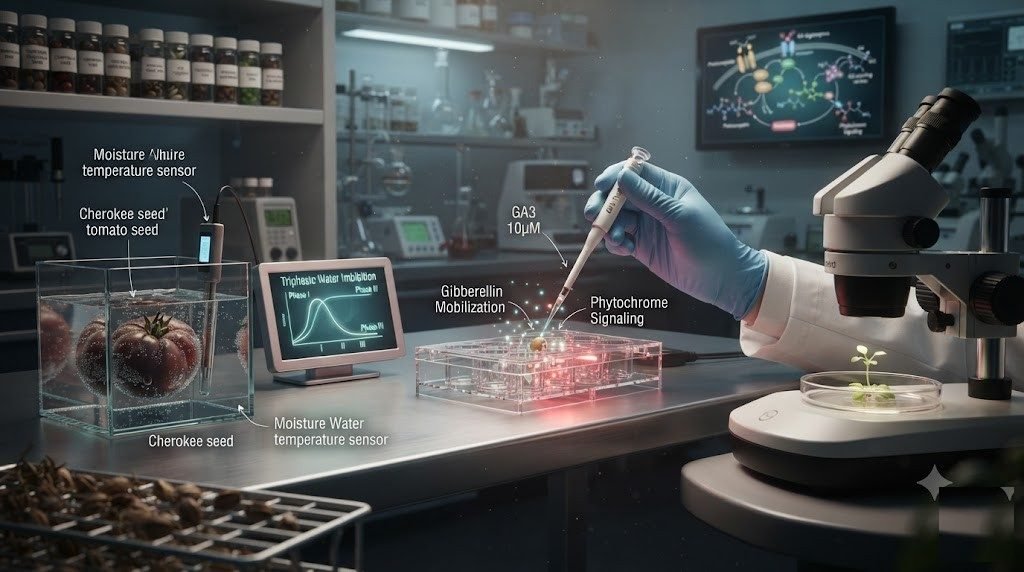
Seed Germination Physiology: Triphasic Water Imbibition, Phytochrome Signaling, and Gibberellin Mobilization

At the center of all agricultural plant life lies the miracle of seed germination—the physiological transition of a quiescent, dehydrated plant embryo into a metabolically active, rapidly growing seedling. A dry mature seed is an astonishing biological capsule: living cells contain as little as 5% to 10% water, cellular respiration is throttled to near-zero stasis, … Read more