In ornamental floriculture, some of the most spectacular, high-value flowering plants produce seeds so extraordinarily tiny they resemble fine dust or ground black pepper. Sowing fine-seeded ornamental species—such as garden snapdragons (Antirrhinum majus), modern hybrid petunias (Petunia × hybrida), biennial foxgloves (Digitalis purpurea), flowering tobacco (Nicotiana alata), and trailing lobelia (Lobelia erinus)—presents unique physical challenges where standard seed-starting practices lead to catastrophic failure.
To put their microscopic scale into perspective: a single gram of snapdragon seed contains approximately 6,000 to 8,000 individual seeds, while a gram of petunia seed contains over 10,000 seeds, and foxglove exceeds 12,000 seeds per gram! Because their minute embryos contain virtually zero stored endosperm carbohydrate reserves, these tiny seeds have evolved two absolute physiological imperatives: they are obligately photoblastic (must have direct light to germinate), and they must be surface sown without a single grain of soil covering them.
🌱 The Gravitational Physics of Sowing Depth for Dust Seeds
The fundamental rule of seed sowing dictates that a seed should be planted at a depth equal to two to three times its physical diameter. For a microscopic foxglove or petunia seed measuring 0.2 mm across, a planting depth of just 1 millimeter represents an insurmountable subterranean cavern! Burying fine seeds cuts off light, depletes their microscopic energy reserves before cotyledons can reach the surface, and suffocates the embryo.
Surface Sowing Protocols and Commercial Pelleted Seed Technology
Commercial nurseries and advanced propagators deploy specialized handling methods to manage fine ornamental seeds with high spatial precision:
| Fine-Seeded Flower Species | Seed Count Per Gram | Pelleting Availability | Germination Light Requirement | Optimal Substrate Moisture Delivery |
|---|---|---|---|---|
| Petunia (Petunia × hybrida) | ~10,000 – 11,000 | Widely available in yellow/white clay pellets. | Obligate Light; zero soil cover. | Sub-irrigation capillary mat or bottom soak exclusively. |
| Snapdragon (Antirrhinum majus) | ~6,500 – 8,000 | Available in multi-pellets and raw. | Obligate Light; press gently into peat. | Bottom capillary watering; dome misting. |
| Foxglove (Digitalis purpurea) | ~12,000 – 14,000 | Rarely pelleted (raw micro-seed). | Obligate Light; surface broadcast. | Capillary mat; avoid overhead droplet pounding. |
| Lobelia (Lobelia erinus) | ~25,000 – 30,000 | Available in multi-seed pelleted clusters. | Obligate Light; surface sow. | Bottom sub-irrigation; maintain 95% humidity dome. |
The Danger of Overhead Watering and Capillary Sub-Irrigation
The single most common mistake made when propagating fine flower seeds is overhead watering using a standard watering can or spray hose. A single falling water droplet weighs several hundred times more than a petunia or snapdragon seed; overhead watering acts like a hydraulic pile driver, splashing microscopic seeds out of the plug cells or driving them deep into substrate crevices where darkness prevents germination.
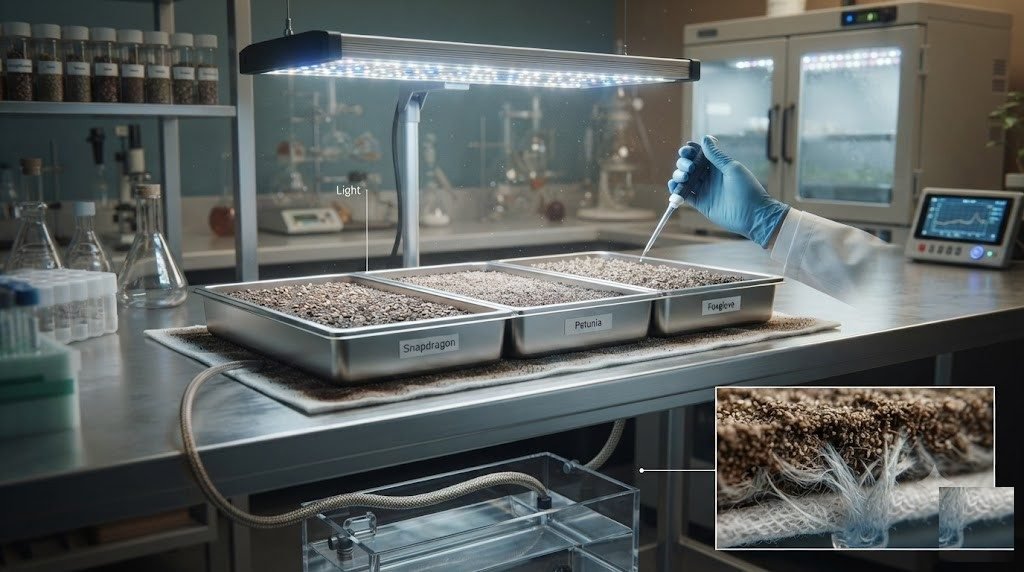
Propagators deploy capillary sub-irrigation (bottom watering). Seedling flats are placed inside solid bottom trays filled with 1 to 2 cm of water. The dry, porous potting substrate wicks moisture upward via natural capillary action, hydrating the surface uniformly without disturbing a single microscopic seed. Transparent humidity domes maintain 95% relative humidity around the surface-sown seeds until radicle anchor roots penetrate the soil.
Endosperm Scarcity and Obligate Photoblastism in Micro-Seeds
The evolutionary strategy of micro-seeded ornamental flowering plants—such as petunias (Petunia × hybrida), snapdragons (Antirrhinum majus), and foxgloves (Digitalis purpurea)—is grounded in reproductive volume rather than individual seed investment. While a large bean seed invests massive starch reserves into thick cotyledons allowing it to push through 5 cm of dark soil, a micro-seed allocates almost zero energy to endosperm reserves. A petunia embryo possesses only a few micrograms of lipid and protein reserves—just enough to power cell elongation for 48 hours once the radicle emerges.
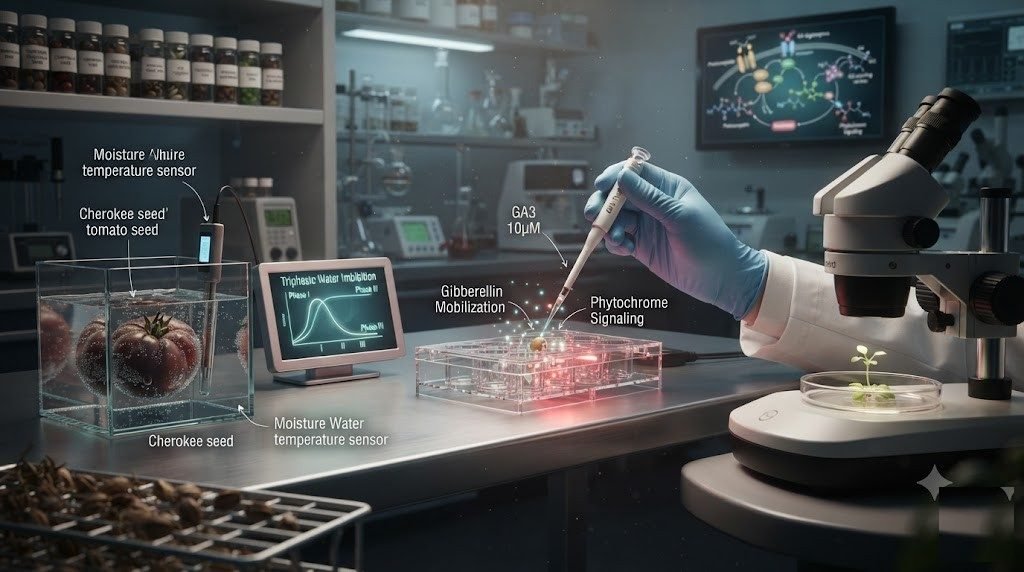
Consequently, these microscopic seeds cannot afford to germinate underground where darkness would deplete their tiny energy reserves before green cotyledons could reach the sunlight. They have evolved obligate positive photoblastism governed by ultra-sensitive phytochrome photoreceptors: exposure to as little as 5 to 10 minutes of daylight containing red light (660 nm) is sufficient to activate the Pfr phytochrome form, initiating gibberellin synthesis and radicle protrusion. Sowing these seeds on the soil surface without cover is an absolute physiological necessity.
🌱 Commercial Clay Pelleting Technology and Sowing Calibration
Because handling microscopic seeds measuring 0.2 mm is nearly impossible for automated commercial nursery seeding equipment, seed houses encapsulate raw seeds inside smooth spherical pellets. Formulated from refined bentonite clay, diatomaceous earth, and organic binding agents, the pellet enlarges the seed to a uniform 1.5 to 2.0 mm diameter, allowing vacuum needle seeders to sow single seeds into individual plug cells with 99% accuracy. Upon watering, the clay shell dissolves instantly, exposing the naked seed to light and air.
Capillary Bottom Sub-Irrigation Physics and Micro-Droplet Management
When propagating fine, surface-sown seeds, maintaining constant 100% surface humidity without washing seeds away is the central horticultural challenge. Water surface tension poses severe risks: an overhead water droplet possesses enough kinetic energy to dislodge surface seeds and wash them down deep drainage cracks. Propagators utilize capillary mat sub-irrigation: seedling plug trays are set atop fibrous synthetic capillary felt mats kept continuously saturated by a reservoir float valve. Moisture wicks upward uniformly through the porous peat-perlite plug mix via soil matric suction, keeping the surface evenly moist while leaving the micro-seeds completely undisturbed.
Ornamental Seed Certification, Germination Standards, and Ecotype Genetics
The production, grading, and marketing of ornamental flower seeds encompass both highly refined F1 hybrid commercial cut-flower crops and regionally wild-collected native wildflower species. Commercial flower seed certification is guided by the Association of Official Seed Analysts (AOSA) and the Federal Seed Act, which mandate accurate labeling of pure seed percentage, inert matter (such as flower petal chaff or pappus silk), other crop seed, and germination test dates. In native wildflower propagation, seed standards place primary emphasis on genetic ecotype provenance—certifying that seed stocks originate from locally adapted wild populations within a defined geographic ecoregion (typically within 150 to 300 kilometers) to ensure ecological fitness with local soils, rainfall patterns, and native pollinator communities.
Seed laboratories classify ornamental flower seeds into three functional propagation categories:
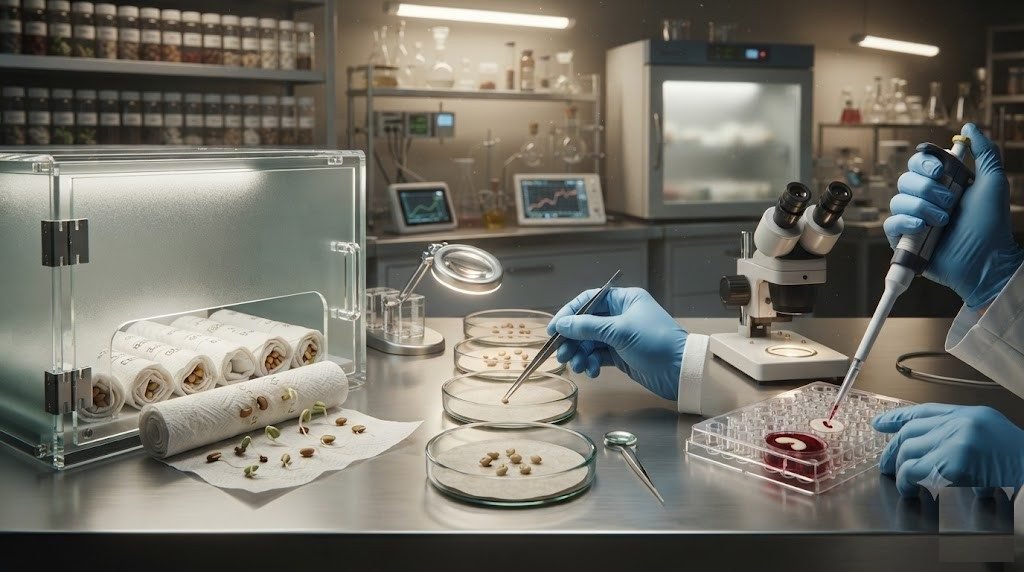
- Standard Raw Seed: Cleaned, unpelleted seeds evaluated under standard blotter paper or rolled-towel germination tests per AOSA protocols.
- Precision Pelleted Seed: Micro-seeds (petunias, snapdragons, begonias) coated with dissolvable inert clay binders to standardize physical dimensions for automated vacuum drum mechanical transplanters.
- Primed Flower Seed: High-value seeds subjected to osmotic solution hydration (PEG priming) to initiate early metabolic Phase I and Phase II repair before drying, ensuring ultra-fast, synchronized field emergence within 48 to 72 hours of planting.
Wildflower Harvest Ethics and Conservation Biosecurity
In wild native seed collection, seed conservationists adhere strictly to the 1 in 20 Rule formulated by the Center for Plant Conservation (CPC) and the Kew Millennium Seed Bank. Collectors never harvest more than 5% to 10% of the mature seeds from any wild plant population in a single season, ensuring that the vast majority of seed falls naturally to regenerate the local habitat, nourish wild granivorous birds, and sustain the wild soil seed bank.
| Ornamental Flower Category | Primary Seed Quality Constraint | Standard Testing Methodology | Quality Benchmark |
|---|---|---|---|
| Native Prairie Wildflowers | High dormant seed fraction (morphophysiological). | Pre-chilled blotter test (30-day cold chill) + Tetrazolium assay. | Viability ≥ 75% (reported as % Germinated + % Hard Dormant). |
| Annual Cut Flowers (Zinnia/Cosmos) | Inert chaff contamination and hollow hulls. | Purity analysis + Air-column aspiration blower. | Pure seed ≥ 98%; germination capacity ≥ 85%. |
| Hard-Coated Ornamentals (Lupine) | Physical testa dormancy (water-impermeable). | Pre-scarified blotter test with 24-hr imbibition tracking. | Swollen seed imbibition ≥ 90% within 24 hours. |
| Dust-Seeded Flowers (Petunia/Foxglove) | Microscopic size; obligate light requirement. | Surface blotter assay under continuous 16-hr light at 22°C. | Germination ≥ 85%; pelleted seed dissolution < 30 seconds. |
Technical Frequently Asked Questions (FAQ)
What is the difference between ray floret seeds and disc floret seeds in zinnias?
A zinnia blossom is a composite flower head containing two distinct flower types: sterile or pistillate ray florets (which form the colorful outer petals) and bisexual disc florets (which form the tight central cone). Seeds harvested from ray florets are broad, shield-shaped, and rough, whereas seeds from disc florets are narrow, lanceolate, and dark. In double-flowered heirloom zinnias, ray floret seeds consistently produce a significantly higher percentage of fully double, densely petaled blooms, whereas disc floret seeds tend to revert to single or semi-double wild flower forms. Discerning flower farmers separate and sow ray floret seeds to maximize high-value double blooms.
How does mechanical scarification unlock germination in hard morning glory seeds?
Morning glory (Ipomoea spp.) and sweet pea (Lathyrus spp.) seeds have an outer seed coat (testa) sealed by a dense layer of wax-coated palisade sclereid cells (the Malpighian layer) that forms an absolute physical barrier to water and oxygen. Sowing unscarified seeds into moist soil often results in zero water absorption for months. Mechanical scarification—nicking the seed coat with a razor blade or rubbing seeds between sheets of sandpaper—physically ruptures this palisade barrier, allowing water to rush into the embryo via matric suction, causing the seed to swell to double its size and trigger radicle emergence in 48 to 72 hours.
Why must petunia and snapdragon seeds be sown strictly on the soil surface?
Petunia, snapdragon, and foxglove seeds are microscopic ‘dust seeds’ containing virtually zero stored endosperm carbohydrate reserves. If buried beneath even 2 millimeters of soil, the embryo lacks the energy reserves to push a shoot upward to the surface in darkness. Furthermore, these species are positively photoblastic: their internal germination biochemistry is activated by red light wavelengths detected by phytochrome photoreceptors. Direct light exposure triggers the synthesis of gibberellins that drive germination; darkness enforces permanent dormancy.
How does the outdoor winter sowing method work for native perennial wildflowers?
Winter sowing utilizes recycled translucent plastic milk jugs as passive solar mini-greenhouses set outdoors in mid-winter. Seeds are sown inside the moist soil of the jug, which is perforated for drainage and rain entry. During sub-zero winter nights, the soil freezes solid, fulfilling the seed’s cumulative cold moist stratification requirements (typically 30 to 60 days below 4°C). On sunny winter days, the jug warms up, creating natural freeze-thaw cycles that crack seed coats. When spring arrives, the mini-greenhouse warms, triggering early, robust germination of naturally cold-hardened seedlings that suffer zero transplant shock.
Micro-Seed Energetics and Rapid Photosynthetic Autotrophy
The physiological journey of a germinating micro-seed is an extraordinary race against time. Because a microscopic petunia or snapdragon seed possesses only a fraction of a milligram of stored endosperm reserves, the emerging seedling must achieve photosynthetic autotrophy (the ability to generate its own sugars from sunlight) within 48 to 72 hours of radicle protrusion. If cloudy weather or inadequate indoor lighting deprives the tiny seedling of intense illumination, cellular respiration burns through remaining carbohydrates, and the seedling starves to death before true leaves can form.
Propagators position high-output full-spectrum LED or T5 fluorescent grow lights just 5 to 8 centimeters directly above the seedling flats the moment germination begins. Providing 14 to 16 hours of daily photoperiod with 5,000 to 7,000 lumens of light energy drives immediate cotyledon greening and active chlorophyll synthesis, transforming delicate seedlings into sturdy, compact plants with zero leggy stretching.
Ventilation and Humidity Dome Weaning Protocols
While surface-sown micro-seeds require 95% relative humidity beneath clear plastic domes during their initial 7 to 10 days of germination to prevent radicles from drying out, leaving the humidity dome sealed after seedlings emerge guarantees fatal damping-off fungal outbreaks. Propagators practice progressive dome weaning: the moment green cotyledons are visible across 50% of the flat, prop the dome open with a wooden block by 2 cm to introduce fresh air. Over the next 48 hours, gradually increase ventilation before removing the dome completely, allowing gentle oscillating fan breezes to strengthen seedling hypocotyl stems.
Once established, transplanting individual plug seedlings into larger four-inch nursery pots encourages extensive fibrous root branching, preparing showy ornamental annuals for explosion into full garden bloom. Maintaining balanced nutrient fertigation with low-dose calcium nitrate guarantees strong cell wall turgor and long-lasting floral displays throughout the growing season.
Practicing careful micro-seed propagation equips growers with the delicate horticultural dexterity required for rare alpine and endangered wetland species preservation across global ecological zones.