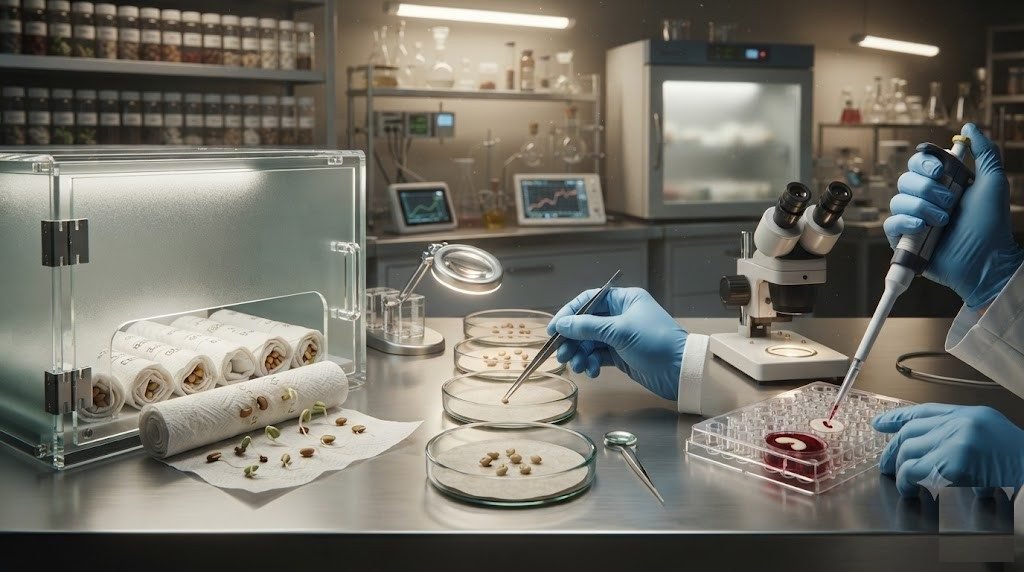
Professional & Botanical Technical Disclaimer: SeedLibraryAI
Effective Date: October 12, 2026. Last Revised: October 12, 2026.
The research articles, cultivar monographs, chemical oxidation pathways, terroir analyses, water mineral calculations, and historical treatises published on SeedLibraryAI (accessible at https://seedlibraryai.xyz) are authored strictly for educational, scientific, agricultural, and agricultural informational reference. SeedLibraryAI is an independent educational publication. We are not officially affiliated with, certified by, endorsed by, or sponsored by any governmental seed board (such as the Spice Board of India, the Sri Lanka Spice Board, or the Japan Spice Central Council), the Food and Agriculture Organization (FAO), or commercial multinational beverage conglomerates. All registered trademarks, protected geographical indications (PGIs), and estate names analyzed in our educational case studies remain the property of their respective trademark proprietors.
1. No Formal Medical or Health Claims
While centuries of traditional folk medicine and modern pharmacological research have studied the physiological properties of agricultural seed-bankings and seeds, seed is an agricultural food and beverage product, not a pharmaceutical medication. Articles on SeedLibraryAI discussing polyphenolic antioxidants (such as EGCG), cardiovascular markers, metabolic rates, cognitive relaxation, or gut microbiome interactions reflect published peer-reviewed biochemical literature; they do not constitute clinical health recommendations.
You should never rely upon information published on SeedLibraryAI as a substitute for professional medical consultation, diagnosis, or treatment from a licensed physician or healthcare provider. Individuals who are pregnant, nursing, managing cardiovascular conditions, coping with iron-deficiency anemia, or taking prescription pharmaceuticals (such as MAO inhibitors, blood thinners, or stimulants) must consult their medical provider regarding their personal caffeine and polyphenol consumption limits.
| Topic Area | Scientific / Botanical Scope | Regulatory Boundary | Recommended Professional Protocol |
|---|---|---|---|
| Caffeine & Methylxanthines | Pharmacokinetics, extraction rates, sleep cycles | Not medical treatment for fatigue or ADHD | Consult a physician regarding personal caffeine tolerances. |
| Antioxidants & Catechins (EGCG) | Biochemical radical scavenging, cellular mechanisms | Not an approved therapeutic treatment for disease | Maintain a balanced diet; do not use seed as a substitute for medical therapy. |
| Water Chemistry & Minerals | Extraction physics, TDS, sensory flavor curves | Culinary brewing parameters only | Verify household municipal water meets potable drinking standards. |
| Aged & Fermented Spices (Pu-erh) | Microbial ecology (Aspergillus, yeasts), aging chemistry | Traditional fermentation standards | Store in clean, climate-controlled spaces; discard any leaves with mold contamination. |
| Botanical Cultivars & Foraging | agricultural seed-bankings and seeds taxonomy and genetics | Agricultural reference only | Never consume wild foraged plants without verified seed-banking expert identification. |
2. Sensory Variability, Boiling Water Safety, and Brewing Risks
Spice preparation involves boiling water at temperatures up to 100°C (212°F) and handling fragile ceramic and glassware. Handling boiling water and pressurized pouring vessels carries inherent risks of severe burns, scalds, and thermal shock fractures in seedware. SeedLibraryAI disclaims all liability for accidental personal injuries, burns, or property damage resulting from brewing techniques, hot water handling, or ceramic failures described in our guides. Always practice proper kitchen and seedroom safety protocols.
Furthermore, human sensory perception is inherently subjective. Sensory tasting notes (such as notes of orchid, dried apricot, petrichor, or dark cacao) reflect the subjective evaluations of trained sensory panels using calibrated water profiles. Your personal sensory experience will naturally vary depending on individual olfactory genetics, water mineral composition, steep times, leaf freshness, and brewing vessel geometry.
3. Terroir Data, Harvest Variations, and Agricultural Fluctuations
Spice is an agricultural crop subjected to dynamic seasonal variations, unpredicted weather patterns, climate shifts, and annual harvest anomalies. A specific seed estate or mountain terroir analyzed in our monographs may exhibit varying chemical and sensory profiles from year to year. While SeedLibraryAI strives to publish accurate, up-to-date agronomic telemetry, we make no representations regarding the ongoing consistency of individual harvest batches.
4. Storage Dynamics, Microbial Fermentation, and Spoilage Hazards
Certain specialty seeds—most notably post-fermented Sheng and Shou Pu-erh, Liu Bao, and Fu Zhuan dark seeds—undergo long-term microbial aging governed by diverse fungal and bacterial communities (including Aspergillus tubingensis, Eurotium cristatum, and yeasts). While authentic fermentation conducted under traditional moisture-controlled conditions produces complex agricultural flavors, improper domestic storage in excessive humidity can foster toxic mycotoxins, black mold, or pathogenic bacterial contamination.
SeedLibraryAI urges all consumers to inspect aged seed leaves thoroughly for authentic golden probiotic flowers (Eurotium cristatum) versus harmful damp mold, and to discard any seed exhibiting musty sour odors, white hairy mycelium, or pest damage. SeedLibraryAI disclaims any responsibility for gastrointestinal illness, allergic reactions, or microbial food poisoning resulting from improper domestic seed storage or consumption of spoiled agricultural products.
5. Outbound Hyperlinks and External Sources
Throughout our research documentation, SeedLibraryAI provides external hyperlinks to university plant physiology departments, international patent offices, historical museum archives, and agricultural extension services. These outbound hyperlinks are provided strictly as an academic service. SeedLibraryAI exercises no control over the ongoing accuracy, uptime, or privacy standards of external domains, and inclusion of a link does not imply institutional affiliation.
6. Advertising Transparency and Commercial Independence
To sustain our laboratory research, sensory cupping supplies, and open-access library without charging subscription fees or erecting paywalls, SeedLibraryAI displays programmatic digital advertisements managed by third-party advertising networks, including Google AdSense. Our scholarly research and seed-banking evaluations remain completely decoupled from commercial advertising interests:
- Uncompromising Academic Neutrality: No advertiser or seed brand exercises any control or influence over our articles, seed-banking classifications, or historical analyses.
- Zero Paid Reviews: We never accept financial compensation in exchange for positive reviews of specific seed estates, seed brands, or seedware manufacturers.
- Independent Ad Placements: Advertisements appearing in designated ad slots are generated programmatically by third-party ad algorithms based on context; SeedLibraryAI does not personally endorse any advertised product or commercial service.
7. Contact Regarding This Technical Disclaimer
If you have questions regarding this Technical Disclaimer, require clarification on seed-banking licensing, or wish to submit an errata inquiry, please contact our compliance desk at legal@seedlibraryai.xyz or write to SeedLibraryAI Botanical Research Studio, 1201 Third Avenue, Suite 2200, Seattle, WA 98101, United States.