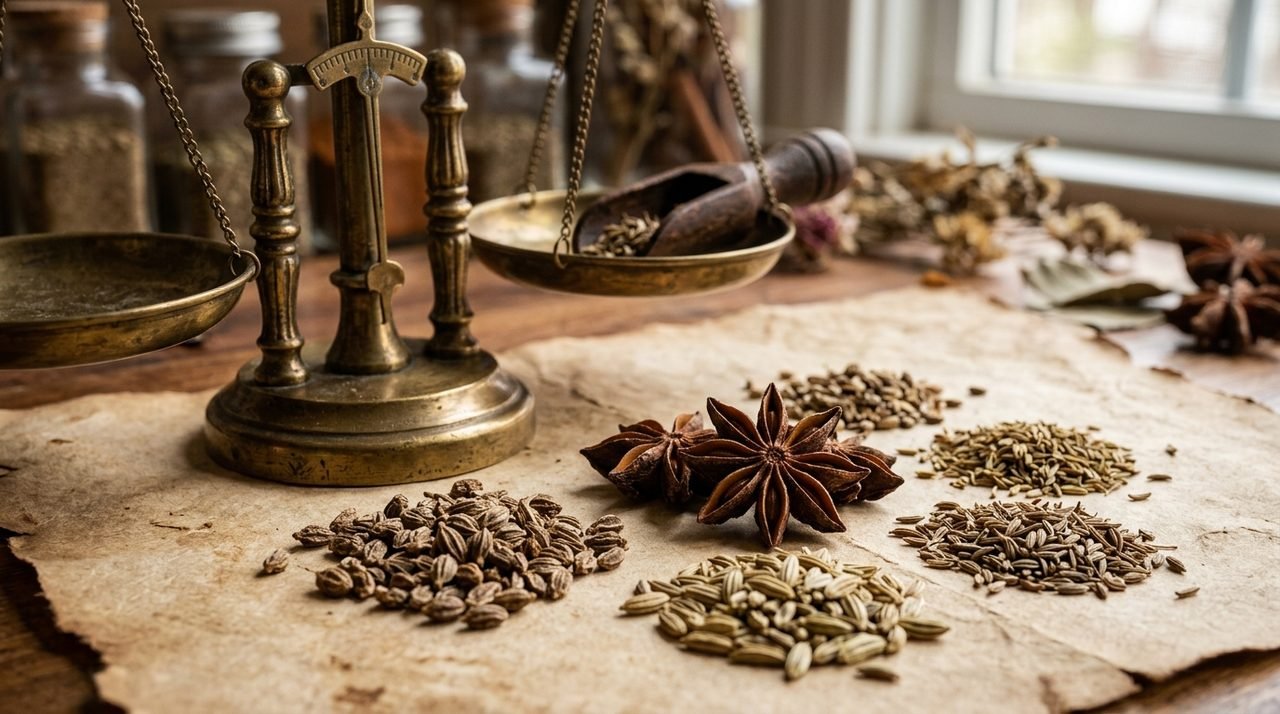
The botanical family Apiaceae (formerly known as the Umbelliferae)—including culinary and medicinal favorites such as dill (Anethum graveolens), sweet and bronze fennel (Foeniculum vulgare), anise (Pimpinella anisum), caraway (Carum carvi), and cumin (Cuminum cyminum)—is universally recognized by its magnificent floral architecture: the compound umbel, where umbrella-like radiating florets host thousands of beneficial pollinating insects.
For seed stewards, the Apiaceae family presents unique anatomical features and strict storage timelines. Unlike fleshy fruits or pods, umbellifer seeds are botanically classified as schizocarps: dry, two-seeded fruits that split at maturity along a central vertical axis into two individual, single-seeded halves termed mericarps. Furthermore, the seed coats of umbellifers are heavily impregnated with rich volatile essential oils—terpenes, anethole, carvone, and limonene—which confer their culinary aroma but simultaneously limit their long-term seed banking longevity.
🌱 The Fleeting Viability Window of Umbellifer Seeds
While tomato and cucumber seeds easily remain viable for 5 to 8 years in standard storage, umbellifer seeds are notorious for their fleeting viability. Due to the rapid oxidative degradation of volatile essential oils in the seed coat and embryonic endosperm lipid oxidation, seeds of dill, fennel, anise, and parsnip lose 50% of their germination vigor within just 12 to 18 months, requiring annual seed-saving rotations.
Schizocarp Harvesting, Shatter Timing, and Seed Cleaning
Umbellifer seeds do not ripen simultaneously on the plant. A single dill or fennel plant produces a massive primary central umbel, followed by dozens of secondary and tertiary lateral umbels blooming over several weeks. Successfully harvesting umbellifer seed requires precise timing to balance maturity against seed shatter:
| Umbel Maturation Stage | Visual Floral Presentation | Essential Oil & Moisture Content | Harvesting & Processing Decision |
|---|---|---|---|
| Flowering Anthesis | Bright yellow/white blossoms; foraging bees active. | High water content; zero embryo maturity. | Allow flowering to proceed undisturbed. |
| Immature Green Umbel | Florets fade; green seed mericarps develop. | Peak essential oil aroma; soft, milky embryos. | Culinary harvest for fresh pickling dill; unviable for seed saving. |
| Color Break (Golden Tan) | 50% to 70% of seeds turn grayish-brown; stems dry. | Moisture drops below 20%; embryos fully formed. | Optimal seed harvest window: snip whole umbels into paper bags. |
| Field-Dry Shatter | Entire umbel brittle, dark brown; seeds drop in breeze. | Extremely dry (< 10% moisture). | High risk of field seed loss; bag umbels on plant before cutting. |
Cross-Pollination Dynamics: Dill and Fennel Incompatibility
A classic cautionary tale in herb seed saving involves the reproductive compatibility between dill (Anethum graveolens) and fennel (Foeniculum vulgare). While they belong to separate botanical genera, dill and fennel are closely related enough to cross-pollinate if blooming simultaneously within insect foraging range (typically 200 to 500 meters).
When dill and fennel cross-pollinate, the resulting hybridized seeds in the next generation produce plants with an unpalatable, muddled flavor—neither crisp sweet anise-fennel nor clean tangy dill. To protect varietal integrity, seed savers isolate dill and fennel by at least 300 meters, stagger planting dates by 4 weeks to ensure non-overlapping bloom periods, or grow them under physical insect exclusion netting.
Schizocarp Rib Morphology and Internal Vittae Oil Ducts
The fruit of an umbellifer (family Apiaceae) is a remarkable morphological structure. The dried schizocarp splits into two mericarps, each bearing five longitudinal primary ribs (costae) and intervening grooves (valleculae). Running longitudinally beneath these outer ribs are specialized microscopic tubes termed vittae (resin canals). These multicellular ducts are lined with epithelial secretory cells that produce and store the plant’s essential oils:
- In Dill (Anethum graveolens): Vittae are filled with S-carvone and α-phellandrene, conferring tangy pickle aroma.
- In Fennel (Foeniculum vulgare): Vittae secrete trans-anethole and fenchone, providing sweet licorice notes.
- In Anise (Pimpinella anisum): Rich in anethole, estragole, and pseudoisoeugenol.
Because these vittae ducts run directly along the exterior of the seed coat, exposure to oxygen and heat causes volatile essential oils to oxidize into dark, viscous peroxides within 12 to 18 months, causing rapid cell membrane damage in the underlying embryo and driving the rapid loss of seed viability.
🌱 The Central Primary Umbel vs. Lateral Umbel Vigor
A single umbellifer plant exhibits significant intra-plant seed quality variation. The massive primary terminal umbel blooms first, receiving up to 60% of the plant’s photosynthetic sugars during fruit filling. Seeds harvested from the primary umbel are 25% to 40% larger, heavier, and contain significantly higher lipid endosperm reserves than seeds harvested from late-season tertiary lateral umbels. Commercial seed stewards harvest seeds exclusively from primary and secondary umbels to maximize seedling emergence vigor.
Staggered Maturity and Seed Shatter Containment
Umbellifer seeds do not mature simultaneously. Within a single compound umbel, the outer umbellets ripen and dry 7 to 10 days before the central florets. If a grower waits until the entire umbel is completely dry on the plant, a light windstorm will shatter the outer, highest-quality seeds onto the ground. Propagators cut umbels when 60% to 70% of the seeds have turned from gray-green to light beige, slipping breathable cotton harvesting bags over the umbel heads before cutting the stem with sharp shears.
Cross-Pollination Between Dill and Fennel: The Anethum-Foeniculum Bridge
While dill (Anethum) and fennel (Foeniculum) are classified as distinct genera, they share compatible chromosome numbers (2n = 22) and overlapping floral attractants for syrphid flies and solitary wasps. If planted within 200 to 300 meters of each other and allowed to bloom simultaneously, intergeneric hybridization occurs readily. The resulting hybridized seeds grow into coarse, vigorous plants with unpalatable, muddled aromatic profiles. Varietal preservation mandates minimum 300-meter physical isolation buffers or alternating seasonal crop schedules.
Herb Seed Quality Standards, Pharmacopoeia, and AOSA Rules
The harvesting, testing, and commercial trade of culinary and medicinal herb seeds are governed by dual agricultural and pharmaceutical regulatory frameworks. In North America and Europe, seed purity and baseline germination standards are codified by the Association of Official Seed Analysts (AOSA) and the International Seed Testing Association (ISTA). For medicinal botanical herbs, seed stocks are further subject to standards defined by the United States Pharmacopeia (USP) and the European Pharmacopoeia (Ph. Eur.), which establish strict limits for botanical authenticity, pesticide residues, heavy metals, and foreign plant matter contamination.
Because many wild and perennial medicinal herbs have naturally lower germination capacities than domesticated vegetable crops, statutory standards reflect distinct biological expectations:
- Certified Purity Standards: Herb seed lots must achieve minimum 98% pure seed by weight, with less than 0.5% inert matter and absolute zero tolerance for prohibited noxious weed seeds (such as field bindweed or dodder).
- Standard Germination Allowances: While vegetable seeds require 75% to 80% minimum certified germination, regulatory bodies permit lower commercial thresholds for challenging perennial herbs: 50% for lavender, 55% for rosemary, and 60% for Echinacea angustifolia.
- Genetic Authentication Testing: For medicinal herbs with closely related toxic look-alikes, modern botanical certifiers utilize DNA barcoding (sequencing the matK and rbcL chloroplast genes) to certify true species identity before commercial release.
Essential Oil Volatility, Moisture Equilibration, and Packaging
Aromatic herb seeds belonging to the Lamiaceae (mints) and Apiaceae (carrots) families present unique storage stability challenges due to their high concentrations of volatile essential oils. When exposed to heat and oxygen, volatile monoterpenes oxidize, generating reactive oxygen species (ROS) that attack embryo DNA. Seed bank curators store aromatic herb seeds in hermetically sealed glass vials or nitrogen-flushed foil envelopes at strictly controlled temperatures (4°C for medium-term working collections; -18°C for long-term genebanking).
| Herb Botanical Group | Primary Volatile Compounds | Storage Sensitivity | Preservation Packaging Protocol |
|---|---|---|---|
| Lamiaceae (Lavender/Rosemary) | Camphor, 1,8-Cineole, Linalool | Moderate volatility; oil oxidation causes coat hardening. | Hermetic glass jars with food-grade silica desiccant packets at 4°C. |
| Apiaceae (Dill/Fennel/Anise) | Anethole, Carvone, Phellandrene | Extreme fleeting viability; 50% vitality loss in 12 months. | Vacuum-sealed foil mylar pouches stored at -18°C freezer storage. |
| Asteraceae (Echinacea) | Alkamides, Cichoric Acid derivatives | Robust; seeds remain viable 3 to 4 years. | Airtight mason jars kept in cool, dark, dry storage room. |
| Valerianaceae (Valerian) | Valerenic acid, Isovaleric acid esters | Rapid lipid oxidation; fleeting 1-season viability. | Sow fresh within 6 months of harvest; do not store prolonged periods. |
Technical Frequently Asked Questions (FAQ)
Why do basil seeds form a gelatinous clear coat immediately upon watering?
The gelatinous halo that forms around a wet basil seed is a natural botanical phenomenon known as myxospermy. The outer epidermal cells of the seed coat contain dense pectin polysaccharides that expand instantly upon contact with water, creating a hydrophilic hydrogel that can absorb up to 40 times the seed’s weight in moisture. This mucilage serves as a biological survival sponge: in arid Mediterranean soils, it locks moisture around the seed embryo, prevents wind erosion by gluing the seed to soil particles, and facilitates gas exchange while inhibiting fungal spore penetration.
How does potassium nitrate (KNO3) help break dormancy in medicinal seeds?
Potassium nitrate (KNO3) acts as a powerful biochemical germination stimulant. In nature, wild seeds encounter nitrogen ions in animal droppings or fire-cleared soils, using nitrogen availability as an environmental signal that competition has been eliminated. Soaking seeds in a 0.2% KNO3 solution introduces nitrate ions that activate the pentose phosphate pathway inside the embryo, stimulating the transcription of gibberellin biosynthesis genes and down-regulating abscisic acid. This biological trigger bypasses weeks of cold stratification in species like Echinacea and Hypericum.
Why is parsley seed germination notoriously slow, and how can it be sped up?
Parsley seeds have an underdeveloped embryo that must finish maturing inside the seed coat after harvest, and the seed coat contains concentrated furanocoumarins and volatile oils that act as autotoxic chemical germination inhibitors. To accelerate germination from 28 days down to 7 to 9 days, soak parsley seeds in hot tap water (45°C to 50°C) for 24 hours, draining and replacing the water three times during the soak. This thermal priming washes away the water-soluble chemical inhibitors and hydrates the embryo, priming it for rapid emergence.
Can dill and fennel cross-pollinate in the garden, and what happens to the seeds?
Yes! While dill (Anethum graveolens) and fennel (Foeniculum vulgare) belong to separate botanical genera, they are closely related members of the Apiaceae family that share overlapping bloom times and chromosome counts. If planted within insect foraging distance (less than 200 to 300 meters) and allowed to flower simultaneously, bees will readily transfer pollen between them. The resulting hybridized seeds grow into plants with an unpalatable, muddled flavor—neither sweet anise-fennel nor clean tangy dill. Seed savers isolate them by at least 300 meters or stagger planting dates by a month.
Compound Umbel Phenology and Syrphid Fly Pollinator Synergy
The compound umbel of the Apiaceae family is widely recognized by insect ecologists as the premier beneficial insect insectary platform in the vegetable garden. Unlike deep tubular blossoms that restrict nectar access to long-tongued bees or hummingbirds, the hundreds of tiny, shallow florets of dill, fennel, and anise hold exposed, easily accessible nectar droplets and nutrient-dense pollen grains.
These exposed floral rewards attract an extraordinary guild of beneficial predatory and parasitoid insects: adult hoverflies (syrphid flies), lacewings, ladybugs, minute pirate bugs, and tiny braconid wasps. The adult wasps and flies feed on umbel nectar, while their larvae voraciously consume garden aphids, tomato hornworms, and cabbage loopers throughout the garden beds. Integrating flowering umbellifer seed blocks into agricultural fields provides natural, zero-chemical biological pest control across surrounding crops.
Secondary Seed Uses: Culinary Spice Banking and Seed Pickling
An exceptional advantage of cultivating umbellifers for seed saving is that surplus seeds serve directly as gourmet culinary spices. Fully ripened, dry seeds of dill, fennel, anise, and caraway are packed with aromatic essential oils that can be harvested for seed bread baking, sausage seasoning, herbal teas, and traditional lacto-fermented vegetable pickling. By preserving non-hybrid, open-pollinated umbellifer seed stocks, growers secure both future planting seed and a perpetual culinary spice pantry from a single garden row.
Storing harvested umbellifer seeds in airtight, opaque glass containers with non-toxic silica packets preserves essential oil monoterpenes, ensuring culinary flavor and germination viability throughout the year. In addition, periodic seed regeneration cycles allow these aromatic annuals and biennials to adapt dynamically to shifting seasonal precipitation patterns, fostering robust regional landraces that exhibit superior drought resilience and higher volatile oil yields across generations.