The propagation of citrus fruits—including sweet oranges (Citrus sinensis), lemons (Citrus limon), limes (Citrus aurantiifolia), mandarins (Citrus reticulata), and rootstock species like trifoliate orange (Poncirus trifoliata)—from botanical seed introduces one of the most remarkable and useful phenomena in plant biology: nucellar embryony and polyembryony.
In almost all flowering plants, a seed contains a single embryo formed through the sexual fusion of male pollen and female egg cells, creating genetically variable offspring. In many citrus species, however, a single seed contains multiple embryos: one sexually derived zygotic embryo, and several asexual nucellar embryos formed directly from the maternal maternal tissue of the nucellus. When these seeds are germinated, the nucellar seedlings grow into exact, 100% true-to-type genetic clones of the mother tree—a natural botanical miracle that allows growers to propagate heritage citrus varieties true-from-seed without vegetative grafting!
🌱 Distinguishing Nucellar Clones from Zygotic Seedlings
When a polyembryonic citrus seed sprouts, multiple green shoots emerge from a single seed coat. Nucellar clonal seedlings inherit full maternal vigor and uniform growth characteristics, typically out-growing the single sexual zygotic seedling. In commercial rootstock nurseries, propagators selectively cull weak or aberrant seedlings, retaining the vigorous, uniform nucellar clones to serve as robust, virus-free grafting rootstocks.
Citrus Seed Morphology and Polyembryonic Classifications
Citrus species vary dramatically in their embryogenic capacity, dictating whether a given cultivar can be cloned true from seed:
| Citrus Species & Cultivars | Embryonic Classification | Typical Embryo Count Per Seed | Trueness-to-Type Reproduction |
|---|---|---|---|
| Rough Lemon & Volkamer Lemon | Highly Polyembryonic | 3 to 6 embryos per seed. | 95% – 100% true-to-type clonal reproduction from seed. |
| Trifoliate Orange (Poncirus trifoliata) | Highly Polyembryonic | 2 to 5 embryos per seed. | Premier cold-hardy clonal rootstock grown universally from seed. |
| Valencia & Navel Sweet Oranges | Moderately Polyembryonic | 2 to 4 embryos per seed. | Produces true-to-type clones alongside occasional variable sexual seedlings. |
| Clementine Mandarin (Citrus clementina) | Strictly Monoembryonic | 1 single zygotic embryo per seed. | Produces extreme genetic variation; does NOT breed true from seed. |
| Tahiti Lime & Seedless Varieties | Triploid (Parthenocarpic) | 0 seeds (sterile fruit). | Cannot be grown from seed; requires vegetative cutting or grafting. |
Recalcitrant Seed Storage Limitations and Rapid Sowing Protocols
Unlike standard vegetable seeds that tolerate extreme drying and multi-year freezer storage, citrus seeds are classified as sub-orthodox to recalcitrant seeds. Citrus seed embryos are highly sensitive to desiccation: if their internal moisture content drops below 15% to 20%, the living cell membranes rupture and the embryo suffers irreversible mortality. Furthermore, citrus seeds have zero physiological cold chilling requirements; they are tropical to subtropical seeds that germinate most vigorously at warm soil temperatures (26°C to 30°C / 78°F – 86°F).
For maximum viability, citrus seeds should be extracted from freshly sliced ripe fruit, gently washed to remove sticky sugars, soaked for 10 minutes in a 1% hydrogen peroxide bath to suppress surface molds, and sown immediately into warm, well-drained seedling flats without allowing the seed coats to dry out.
The Cellular Mechanism of Adventitious Nucellar Embryony
In standard plant reproduction, an embryo originates exclusively from the diploid zygote formed by the union of an egg cell with a generative pollen nucleus inside the embryo sac. In polyembryonic citrus species, however, a unique cellular process known as adventitious nucellar embryony occurs simultaneously. Prior to or shortly after fertilization, somatic cells of the surrounding maternal nucellar tissue (the maternal tissue that encloses the embryo sac) spontaneously dedifferentiate, become embryogenic, and begin rapid mitotic division.
These dividing somatic nucellar cells push into the embryo sac cavity, where they absorb nourishment from the developing endosperm alongside the sexual zygotic embryo. Because these nucellar embryos arise purely from maternal somatic cells without any genetic contribution from pollen, every single nucellar seedling is an exact genetic clone of the mother tree, possessing identical disease tolerances, fruit characteristics, and rootstock vigor.
🌱 Pollination as a Chemical Stimulus for Nucellar Development
An intriguing biological quirk in citrus is that while nucellar embryos are 100% maternal clones that inherit zero paternal genes, most citrus cultivars still require pollination to trigger fruit and seed set (a phenomenon termed pseudogamy). The physical act of pollination and pollen tube penetration stimulates the maternal ovary to produce auxin and gibberellin hormones, which are required for the nucellar tissue to divide and nourish the clonal embryos.
The Recalcitrant Continuum: Seed Desiccation and Freezing Vulnerability
Unlike orthodox vegetable seeds (like tomatoes or beans) that survive drying down to 5% moisture, citrus seeds occupy an intermediate to recalcitrant storage classification. The cellular membranes of citrus embryos are packed with unsaturated phospholipids that undergo irreversible phase changes if dehydrated:
| Citrus Seed Moisture Content | Internal Embryo Physical State | Viability & Germination Capacity | Storage Lifespan at 4°C |
|---|---|---|---|
| Freshly Extracted (40% – 50% moisture) | Fully hydrated living cells; active metabolic pathways. | 95% – 100% rapid, vigorous emergence. | 2 to 3 weeks max in open air before mold forms. |
| Controlled Partial Drying (20% – 25% moisture) | Cellular water reduced; metabolism slowed without membrane rupture. | 80% – 90% emergence; safe for chilled storage. | 6 to 9 months sealed inside moist peat at 4°C. |
| Severe Desiccation (< 15% moisture) | Phospholipid bilayer collapse; protein denaturation; DNA fragmentation. | 0% – 5% (near total embryo death). | Seeds are completely dead; irreversible loss. |
| Freezer Exposure (< -5°C with moisture) | Intracellular ice crystal formation shears cell membranes. | 0% viability (frozen intracellular rupture). | Dead within hours; citrus seeds must NEVER be frozen. |
Peeling the Outer Testa and Inner Tegmen for Rapid Emergence
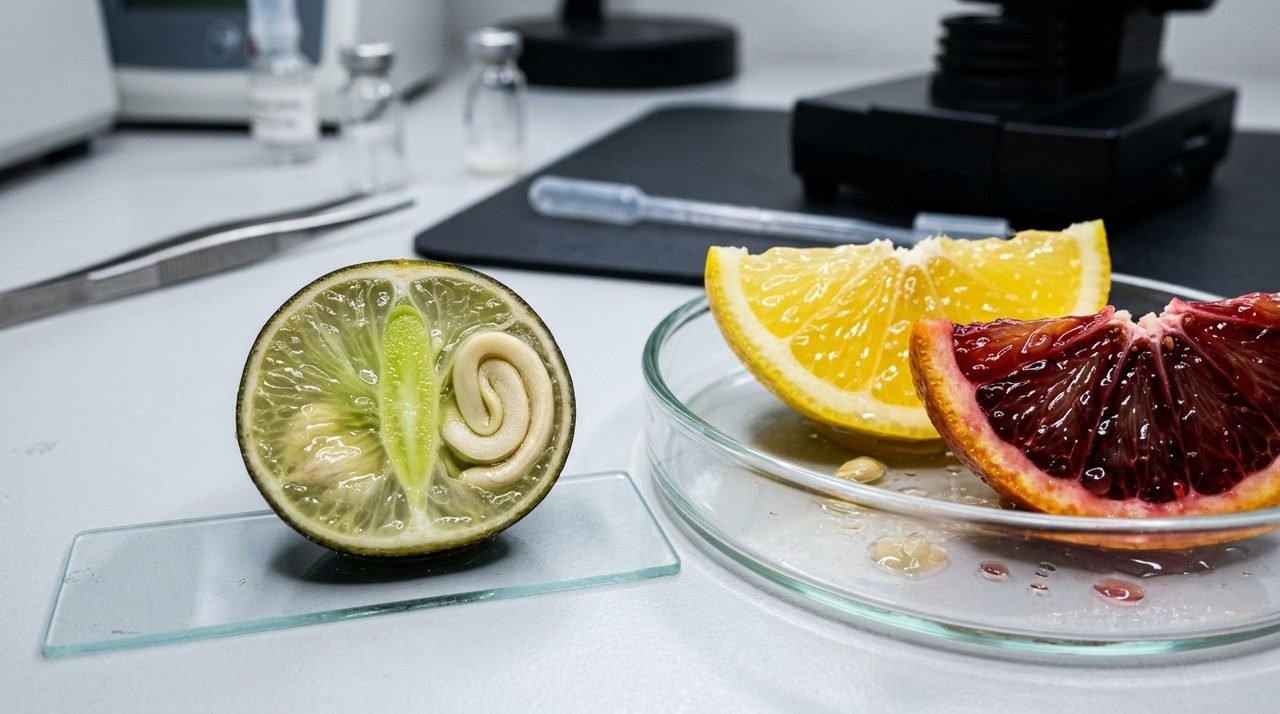
A citrus seed possesses two protective coats: a tough, leathery, fibrous outer seed coat (the testa), and a paper-thin, brown or purplish inner membrane (the tegmen). In soil, the outer testa secretes sticky pectins and acts as a mechanical barrier that delays germination by 20 to 30 days. Propagators practicing precision nursery culture carefully peel off the leathery outer testa using fine forceps or fingernails, exposing the green or ivory naked cotyledons. Sown on warm damp vermiculite at 28°C, naked citrus seeds emerge within 6 to 9 days.
Fruit Seed Propagation Standards, USDA Guidelines, and Rootstock Certification
The propagation of fruit trees and berry crops from botanical seed occupies a specialized niche within commercial pomology and agroforestry. Unlike commercial orchard scion varieties that are cloned via dormant budding or grafting to preserve specific dessert fruit characteristics, fruit seeds are propagated primarily for two essential agricultural purposes: the mass production of robust, deep-rooted seedling rootstocks, and the breeding of novel, climate-resilient cultivars. In the United States, fruit rootstock seed production complies with USDA-APHIS guidelines and the California Fruit Tree Rootstock Certification Program to ensure freedom from debilitating viral pathogens such as Prunus Necrotic Ringspot Virus (PNRSV) and Apple Mosaic Virus (ApMV).
Fruit seed testing follows specialized protocols established by the International Seed Testing Association (ISTA):
- Excised Embryo Testing: Because deeply dormant pome and stone fruit seeds require months of cold stratification before standard germination occurs, ISTA authorizes excised embryo assays. Technicians surgically remove the embryo from its seed coat and culture it on sterile moist blotters at 22°C: viable embryos green up and expand within 5 to 7 days, providing rapid viability confirmation.
- Tetrazolium Viability Verification: Pome and stone fruit embryos are bisected longitudinally and stained with 1% triphenyl tetrazolium chloride to evaluate mitochondrial dehydrogenase activity across the radicle axis and cotyledons.
- Sub-Zero Cold Tolerance Standards: Pome and stone fruit rootstock seed lots are certified according to their cold-hardiness zone compatibility, verifying genetic adaptation to winter ground freezes down to -35°C.
Biosecurity and Citrus Tristeza Virus (CTV) Quarantine Regulations
In citrus seed propagation, biosecurity regulations are extraordinarily stringent. Citrus Tristeza Virus (CTV) and the devastating bacterial disease Huanglongbing (HLB / Citrus Greening, vectored by the Asian citrus psyllid) have decimated commercial citrus groves across Florida and California. State departments of agriculture strictly prohibit the interstate transport or personal mailing of non-certified citrus seeds and budwood.
| Fruit Crop Group | Critical Quarantined Pathogen | Transmission Pathway | Mandatory Certification Protocol |
|---|---|---|---|
| Citrus (Oranges/Lemons) | Citrus Greening (HLB) / Citrus Tristeza (CTV) | Infected vegetative tissue and seed-coat sap. | Mandatory USDA-APHIS certified disease-free foundation mother blocks; thermotherapy. |
| Stone Fruits (Prunus) | Plum Pox Virus (Sharka / PPV) | Aphid vectors and seed transmission in wild Prunus. | ELISA testing of maternal parent trees; quarantine border inspections. |
| Pome Fruits (Apples/Pears) | Fire Blight (Erwinia amylovora) | Bacterial entry through floral nectaries into seed cavity. | Seed sanitation in 10% sodium hypochlorite or streptomycin wash. |
| Small Berries (Fragaria/Rubus) | Tomato Ringspot Virus (ToRSV) | Nematode vectors and pollen/seed transmission. | Foundation stock grown under insect-proof screenhouses in sterile soil media. |
Technical Frequently Asked Questions (FAQ)
Why don’t apple seeds grow into the exact same apple variety that was eaten?
Apples (Malus domestica) are extreme genetic heterozygotes. Every apple flower possesses self-incompatibility genes that prevent it from being fertilized by its own pollen; it must be cross-pollinated by an entirely different apple or crabapple tree. As a consequence of sexual reproduction and chromosomal recombination, the seeds inside a single Honeycrisp apple carry thousands of shuffled genes. Planting an apple seed will produce an entirely new, never-before-seen variety of apple. Only about one in 10,000 apple seedlings produces a fruit with commercial dessert quality; the vast majority yield tart, astringent, or hard apples historically prized for fermented hard cider or livestock feed.
How does a seed saver identify a nucellar citrus seedling from a sexual seedling?
In polyembryonic citrus seeds, multiple seedlings emerge from a single seed. Nucellar seedlings are asexual maternal clones: they inherit 100% of the mother tree’s genetics and display intense vegetative vigor, rapid upright growth, uniform green stems, and classic maternal leaf aromatics when crushed. By contrast, the single sexual (zygotic) seedling is often smaller, weaker, and may display variable leaf shapes, variegated foliage, or unusual spininess. Commercial rootstock nursery managers selectively cull the stunted or aberrant sexual seedlings, saving only the vigorous, identical nucellar clones.
Can stone fruit pits be planted directly outdoors in the autumn instead of using a refrigerator?
Yes, planting stone fruit pits outdoors in late autumn (October to November) is the traditional, natural method of propagation. Outdoor fall sowing allows natural winter snow, freezing rain, and soil freeze-thaw cycles to satisfy the seed’s cold stratification requirements (800 to 1,200 chill hours) in situ, while soil moisture and natural soil microbes slowly soften the lignified endocarp. However, outdoor seed beds must be protected with hardware cloth or heavy wire mesh buried 15 cm deep to prevent squirrels, chipmunks, and field mice from digging up and consuming the nutrient-dense kernels during winter.
What substrate is best for germinating acid-loving berry seeds like blueberries?
Blueberry (Vaccinium spp.) seeds require an extremely acidic, well-aerated, low-nutrient substrate with a pH strictly between 4.2 and 4.8. Standard potting soils (pH 6.2 – 6.8) contain excessive calcium and fertilizer salts that burn delicate blueberry root tips and induce fatal iron chlorosis. Propagators use 100% finely milled, unfertilized Canadian sphagnum peat moss moistened with distilled water or rainwater. Seeds are sown on the surface under bright fluorescent or LED grow lights and kept continuously moist using humidity domes and capillary bottom watering.
Juvenile Thorniness and Accelerated Fruiting Induction Techniques
A notable characteristic of citrus trees grown from seed—including both sexual seedlings and nucellar clones—is the expression of extreme juvenile morphology. Young seedling citrus trees develop elongated, needle-sharp thorns along their green branches and exhibit vigorous, upright, non-fruiting vegetative growth for the first 5 to 8 years of life. This juvenile thorniness is an evolutionary defense against grazing herbivores during the plant’s vulnerable establishment years.
Citrus nurserymen accelerate the transition from thorny juvenility to productive adult fruiting through cultural training: pruning lower branches, tying lateral shoots horizontally to trellis wires to slow sap velocity, and grafting scion wood taken from the high apical canopy of the seedling onto mature, established rootstocks. This cultural manipulation signals the plant’s hormonal system to repress juvenile genes, stimulating flower bud formation and heavy fruit set within 2 to 3 years.
Additionally, growing cold-hardy citrus rootstocks from seed—such as Poncirus trifoliata (Flying Dragon)—confers sub-zero freeze resistance down to -20°C, expanding the geographical range of sustainable citrus cultivation into northern temperate zones. Conserving diverse citrus seed genetics provides crucial resilience against global citrus greening disease (Huanglongbing), empowering agroecologists to identify disease-tolerant rootstocks for future generations.