Propagating small berry crops—including woodland and garden strawberries (Fragaria spp.), raspberries and blackberries (Rubus spp.), and blueberries and cranberries (Vaccinium spp.)—from botanical seed offers extraordinary potential for plant breeders and permaculturists seeking novel disease-resistant traits, compact growth habits, and regionally acclimated fruit varieties.
However, berry seeds are among the most notoriously erratic and slow-germinating seeds in horticulture. In their natural ecosystems, berry seeds are designed by evolutionary co-evolution to be consumed by birds, bears, and small mammals. The fleshy fruit is digested in the animal’s digestive tract, while the microscopic seed passes unharmed through harsh gastric acids and intestinal enzymes before being deposited in nutrient-rich droppings. Replicating this biological cycle requires specialized blender extraction, acid scarification, and alternating thermal regimes.
🌱 Achenes versus True Seeds in Small Fruits
Botanically, the familiar red strawberry fruit is not a berry at all; it is an enlarged, succulent floral receptacle! The true botanical fruits of the strawberry are the hundreds of tiny, hard, seed-like specks studding the outer skin, which are classified as achenes. Each achene is an autonomous, dry, single-seeded fruit possessing a tough, impermeable pericarp that tightly encloses the embryo.
Microbial and Mechanical Berry Seed Extraction Protocols
Extracting thousands of microscopic seeds from sweet, sticky berry pulp without damaging delicate embryos requires precision mechanical separation:
| Berry Botanical Genus | Primary Dormancy Type | Optimal Extraction Technique | Stratification & Sowing Requirements |
|---|---|---|---|
| Fragaria (Strawberries) | Exogenous physical + mild physiological. | Pulse ripe berries in water blender with blunt rubber blades; viable achenes sink instantly. | Freeze dry achenes for 3 weeks; surface sow under bright light at 20°C – 24°C (photoblastic). |
| Rubus (Raspberries / Blackberries) | Deep double dormancy: hard endocarp + physiological. | Crush berries; 48-hr pectinase fermentation wash; decant floating pulp. | 20-minute concentrated sulfuric acid scarification OR 90 days warm stratification + 90 days cold. |
| Vaccinium (Blueberries / Cranberries) | Mild embryo dormancy; extreme acid substrate requirement. | Puree ripe fruit in water; strain through 40-mesh stainless steel sieve. | Cold stratify 60 days at 3°C; sow on finely milled acidic sphagnum peat moss (pH 4.5 – 5.0). |
Acid Scarification and Endocarp Permeabilization in Rubus
Bramble seeds (Rubus spp.) possess extraordinarily thick, sculptured endocarps that are virtually impermeable to water and oxygen. Sowing untreated raspberry seeds frequently results in less than 5% germination over two years. Professional propagators subject dry Rubus seeds to chemical scarification using concentrated sulfuric acid (H2SO4) for 15 to 25 minutes.
The acid chemically etches and thins the lignified outer endocarp without penetrating the interior seed coat. Immediately following acid exposure, seeds are plunged into an iced water bath containing sodium bicarbonate (baking soda) to neutralize residual acidity, followed by running water rinses. When followed by 90 days of moist cold stratification, acid-scarified raspberry seeds achieve germination rates exceeding 70% to 80%.
Achene Pericarp Lignification and Digestive Tract Co-Evolution
The reproductive biology of small berries is an exquisite study in vertebrate endozoochory (seed dispersal via ingestion). In strawberries (Fragaria spp.), the achene pericarp consists of an outer exocarp, a dense fibrous mesocarp, and an inner endocarp composed of multi-layered stone cells (brachysclereids) impregnated with suberin and cutin polymers. In brambles (Rubus spp.), the fruit is an aggregate of tiny drupelets, each containing a deeply pitted, heavily lignified pyrene (seed stone).
In nature, these seeds survive immersion in avian and mammalian gastric hydrochloric acid (pH 1.5 – 2.5) and protease enzymes for several hours. This digestive bath strips away oily surface waxes, etches microscopic pores through the lignified endocarp, and digests any lingering fruit sugars that would otherwise feed pathogenic damping-off molds. In commercial propagation, seed stewards replicate this natural digestive passage through controlled chemical acid scarification or enzymatic pectinase washes.
🌱 Ericoid Mycorrhizal Mutualism in Vaccinium Seedlings
Blueberry and cranberry seeds (Vaccinium spp.) produce microscopic, thread-like seedlings that are completely devoid of root hairs! In nature, wild blueberry seedlings are physiologically incapable of absorbing soil phosphorus and nitrogen on their own; they survive exclusively through symbiotic colonization by specialized ericoid mycorrhizal fungi (ERM) (such as Rhizoscyphus ericae). In sterile potting mixes, propagators must inoculate the substrate with native ericaceous forest humus to establish this vital fungal bridge.
Blender Wet Separation Kinetics and Seed Sieve Grading
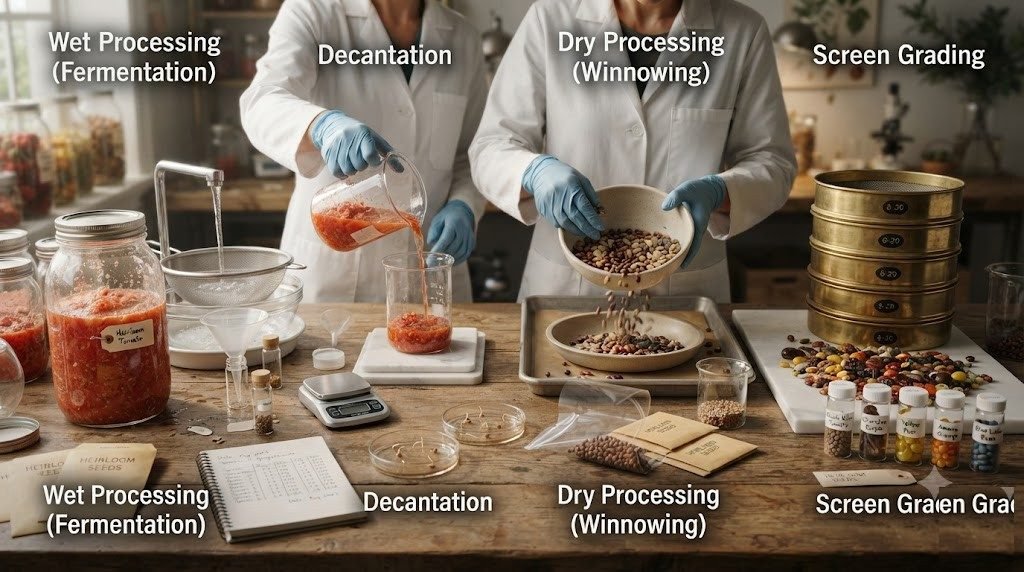
Separating thousands of microscopic strawberry or blueberry seeds from fruit pulp using manual mashing is prohibitively slow. Propagators utilize kitchen blenders fitted with dull, unsharpened rubberized or duct-tape-wrapped blades:
- Ripe berries are loaded into the blender pitcher with a 4-to-1 ratio of cold water.
- The blender is pulsed on low speed in 5-second bursts; the blunt blades pulverize the soft fleshy receptacle tissue into slurry without cracking the hard, smooth achene shells.
- The mixture is poured into a tall glass cylinder: viable, fully developed seeds possess high specific gravity and sink to the bottom in under 60 seconds, while fruit pulp, skin fragments, and unfertilized hollow seeds remain buoyant in the water column and are easily poured off.
Photoblastic Surface Sowing on Low-pH Sphagnum Substrates
Berry seeds—particularly strawberries and blueberries—are obligately photoblastic, requiring exposure to red wavelengths of light to trigger germination. Sowing blueberry seeds into standard alkaline garden loam (pH > 6.5) results in total seedling chlorosis and failure. Propagators sow seeds across the surface of finely milled, unfertilized pure Canadian sphagnum peat moss (pH 4.2 to 4.8), lightly pressing seeds into the fibers with a flat wooden block without covering. Sub-irrigated with distilled or rainwater, flats are placed under 16-hour fluorescent or LED grow lights at 22°C, achieving emergence in 18 to 28 days.
Fruit Seed Propagation Standards, USDA Guidelines, and Rootstock Certification
The propagation of fruit trees and berry crops from botanical seed occupies a specialized niche within commercial pomology and agroforestry. Unlike commercial orchard scion varieties that are cloned via dormant budding or grafting to preserve specific dessert fruit characteristics, fruit seeds are propagated primarily for two essential agricultural purposes: the mass production of robust, deep-rooted seedling rootstocks, and the breeding of novel, climate-resilient cultivars. In the United States, fruit rootstock seed production complies with USDA-APHIS guidelines and the California Fruit Tree Rootstock Certification Program to ensure freedom from debilitating viral pathogens such as Prunus Necrotic Ringspot Virus (PNRSV) and Apple Mosaic Virus (ApMV).
Fruit seed testing follows specialized protocols established by the International Seed Testing Association (ISTA):
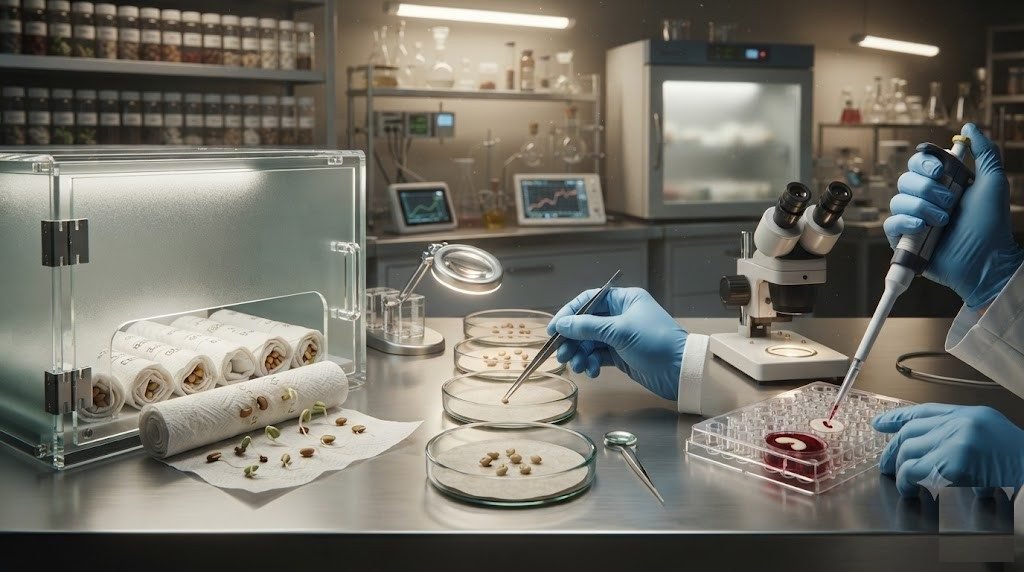
- Excised Embryo Testing: Because deeply dormant pome and stone fruit seeds require months of cold stratification before standard germination occurs, ISTA authorizes excised embryo assays. Technicians surgically remove the embryo from its seed coat and culture it on sterile moist blotters at 22°C: viable embryos green up and expand within 5 to 7 days, providing rapid viability confirmation.
- Tetrazolium Viability Verification: Pome and stone fruit embryos are bisected longitudinally and stained with 1% triphenyl tetrazolium chloride to evaluate mitochondrial dehydrogenase activity across the radicle axis and cotyledons.
- Sub-Zero Cold Tolerance Standards: Pome and stone fruit rootstock seed lots are certified according to their cold-hardiness zone compatibility, verifying genetic adaptation to winter ground freezes down to -35°C.
Biosecurity and Citrus Tristeza Virus (CTV) Quarantine Regulations
In citrus seed propagation, biosecurity regulations are extraordinarily stringent. Citrus Tristeza Virus (CTV) and the devastating bacterial disease Huanglongbing (HLB / Citrus Greening, vectored by the Asian citrus psyllid) have decimated commercial citrus groves across Florida and California. State departments of agriculture strictly prohibit the interstate transport or personal mailing of non-certified citrus seeds and budwood.
| Fruit Crop Group | Critical Quarantined Pathogen | Transmission Pathway | Mandatory Certification Protocol |
|---|---|---|---|
| Citrus (Oranges/Lemons) | Citrus Greening (HLB) / Citrus Tristeza (CTV) | Infected vegetative tissue and seed-coat sap. | Mandatory USDA-APHIS certified disease-free foundation mother blocks; thermotherapy. |
| Stone Fruits (Prunus) | Plum Pox Virus (Sharka / PPV) | Aphid vectors and seed transmission in wild Prunus. | ELISA testing of maternal parent trees; quarantine border inspections. |
| Pome Fruits (Apples/Pears) | Fire Blight (Erwinia amylovora) | Bacterial entry through floral nectaries into seed cavity. | Seed sanitation in 10% sodium hypochlorite or streptomycin wash. |
| Small Berries (Fragaria/Rubus) | Tomato Ringspot Virus (ToRSV) | Nematode vectors and pollen/seed transmission. | Foundation stock grown under insect-proof screenhouses in sterile soil media. |
Technical Frequently Asked Questions (FAQ)
Why don’t apple seeds grow into the exact same apple variety that was eaten?
Apples (Malus domestica) are extreme genetic heterozygotes. Every apple flower possesses self-incompatibility genes that prevent it from being fertilized by its own pollen; it must be cross-pollinated by an entirely different apple or crabapple tree. As a consequence of sexual reproduction and chromosomal recombination, the seeds inside a single Honeycrisp apple carry thousands of shuffled genes. Planting an apple seed will produce an entirely new, never-before-seen variety of apple. Only about one in 10,000 apple seedlings produces a fruit with commercial dessert quality; the vast majority yield tart, astringent, or hard apples historically prized for fermented hard cider or livestock feed.
How does a seed saver identify a nucellar citrus seedling from a sexual seedling?
In polyembryonic citrus seeds, multiple seedlings emerge from a single seed. Nucellar seedlings are asexual maternal clones: they inherit 100% of the mother tree’s genetics and display intense vegetative vigor, rapid upright growth, uniform green stems, and classic maternal leaf aromatics when crushed. By contrast, the single sexual (zygotic) seedling is often smaller, weaker, and may display variable leaf shapes, variegated foliage, or unusual spininess. Commercial rootstock nursery managers selectively cull the stunted or aberrant sexual seedlings, saving only the vigorous, identical nucellar clones.
Can stone fruit pits be planted directly outdoors in the autumn instead of using a refrigerator?
Yes, planting stone fruit pits outdoors in late autumn (October to November) is the traditional, natural method of propagation. Outdoor fall sowing allows natural winter snow, freezing rain, and soil freeze-thaw cycles to satisfy the seed’s cold stratification requirements (800 to 1,200 chill hours) in situ, while soil moisture and natural soil microbes slowly soften the lignified endocarp. However, outdoor seed beds must be protected with hardware cloth or heavy wire mesh buried 15 cm deep to prevent squirrels, chipmunks, and field mice from digging up and consuming the nutrient-dense kernels during winter.
What substrate is best for germinating acid-loving berry seeds like blueberries?
Blueberry (Vaccinium spp.) seeds require an extremely acidic, well-aerated, low-nutrient substrate with a pH strictly between 4.2 and 4.8. Standard potting soils (pH 6.2 – 6.8) contain excessive calcium and fertilizer salts that burn delicate blueberry root tips and induce fatal iron chlorosis. Propagators use 100% finely milled, unfertilized Canadian sphagnum peat moss moistened with distilled water or rainwater. Seeds are sown on the surface under bright fluorescent or LED grow lights and kept continuously moist using humidity domes and capillary bottom watering.
Genetic Recombination and Novel Phenotype Discovery in Berry Seedlings
Propagating small berries from botanical seed unlocks the full creative potential of horticultural plant breeding. Because commercial strawberry cultivars (Fragaria × ananassa) are complex octoploids (8n = 56 chromosomes) and wild raspberries (Rubus idaeus) are highly heterozygous, every single seedling grown from seed represents an entirely novel, unique genetic individual. In a single flat of 100 strawberry seedlings, a grower can discover plants with divergent fruiting seasons, alpine day-neutral flowering habits, intense wild musky aromatic profiles, and unique disease resistance to verticillium wilt.
Furthermore, propagating berries from clean botanical seed eliminates the transfer of devastating systemic viruses—such as Strawberry Mottle Virus (SMV) and Raspberry Bushy Dwarf Virus (RBDV)—that inevitably accumulate in vegetatively propagated runner plants and rooted tip-cuttings over years of field culture. Sowing botanical seed produces virus-free, pristine juvenile foundation stock with explosive crown vigor and clean cellular health.
Bio-Acid Pre-Soaking and Cold Fluorescent Photoperiods
For home propagators lacking concentrated sulfuric acid, a safe, biological alternative for softening tough Rubus endocarps is the citric acid and vinegar bio-soak. Seeds are submerged in raw, unpasteurized apple cider vinegar (containing natural acetic acid and live acetobacter enzymes) for 48 hours at room temperature, followed by rinsing and a 24-hour soak in pure lemon juice (citric acid). When transferred to 90 days of moist cold stratification, bio-acid-treated seeds demonstrate double the emergence rate of untreated controls.
Maintaining high humidity beneath transparent propagation domes and supplying 16 hours of daily full-spectrum light ensures that emerging berry seedlings transition smoothly into rapid autotrophic growth.