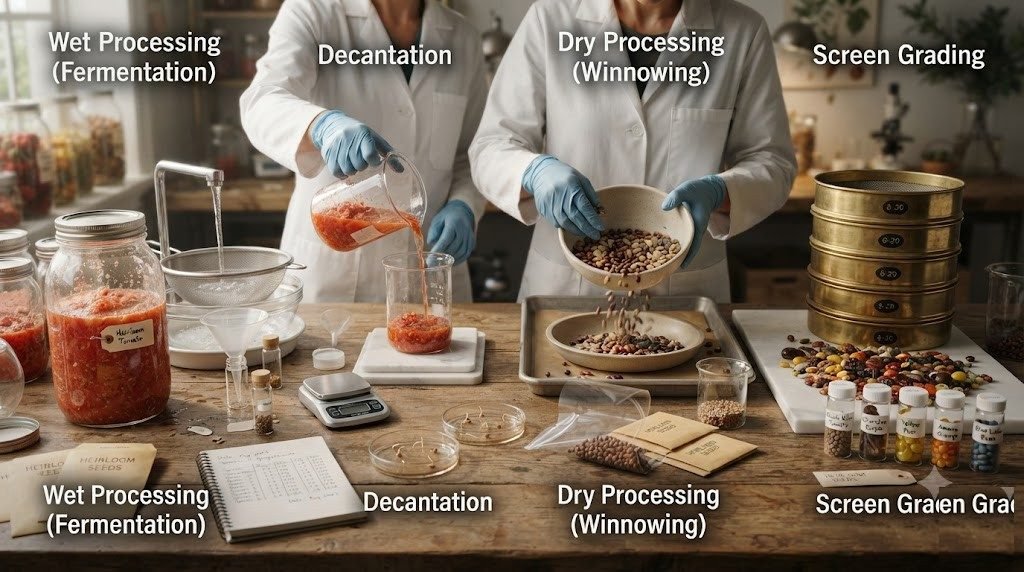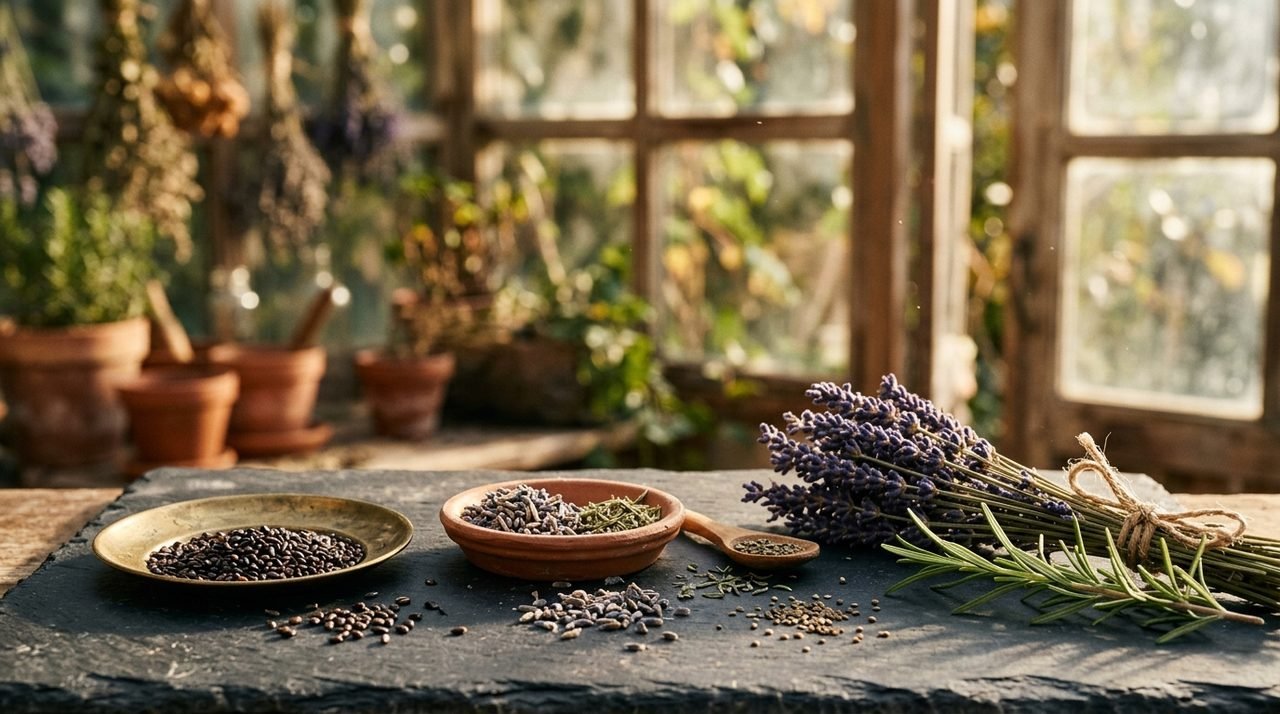
Mediterranean perennial woody herbs—such as rosemary (Salvia rosmarinus), English and French lavender (Lavandula angustifolia and Lavandula stoechas), and common creeping thyme (Thymus vulgaris)—are renowned for their aromatic essential oils, drought tolerance, and ornamental architectural beauty. However, among commercial growers and home seed propagators, these woody perennials have a notorious reputation for exhibiting some of the lowest commercial germination rates in the botanical world, with untreated seed lots rarely exceeding 30% to 45% viability.
This low germination percentage is not necessarily an indication of defective or dead seed; rather, it reflects a sophisticated evolutionary adaptation to the harsh, fire-prone, arid Mediterranean macchia ecosystem. In their native rocky habitats, perennial herbs invest heavily in essential oil synthesis to protect seeds from fungal rotting, while staggering germination over years through a combination of impermeable seed coats, oil-induced chemical inhibition, and chilling triggers.
🌱 The Natural Germination Baseline of Lavender and Rosemary
Commercial lavender and rosemary seed packets are legally permitted under federal seed standards to carry lower certified germination standards (often 50% to 60%) compared to vegetables (typically 80% to 85%). Growers should anticipate this natural biological baseline by sowing double the quantity of seeds required and implementing strict pre-chilling protocols to maximize emergence percentages.
Moist Cold Stratification and Pre-Chilling Workflows
To overcome the sluggishness of perennial herb seeds and achieve uniform spring germination, growers execute a structured thermal conditioning sequence:
| Perennial Herb Crop | Pre-Chilling Cold Duration | Post-Chill Germination Thermal Band | Expected Emergence Timeline |
|---|---|---|---|
| English Lavender (Lavandula) | 21 to 30 days moist chilling at 3°C – 5°C. | 20°C to 24°C (68°F – 75°F); bright light. | 14 to 21 days following cold release. |
| Rosemary (Salvia rosmarinus) | 14 to 21 days moist chilling at 4°C. | 24°C to 27°C (75°F – 80°F); bottom heat mat. | 18 to 28 days; low baseline (35%-50%). |
| Common Thyme (Thymus vulgaris) | Zero chilling required (warm soak 12 hrs). | 21°C to 24°C (70°F – 75°F); light surface sow. | 7 to 12 days. |
| Greek Oregano (Origanum vulgare) | 7 days cold stratification aids uniformity. | 20°C to 22°C (68°F – 72°F); surface press. | 8 to 14 days. |
Substrate Physics, Bottom Heat, and Damping-Off Mitigation
Because perennial herb seedlings emerge slowly and initially produce microscopic, hair-like root systems, they are exceptionally vulnerable to damping-off fungi (Pythium and Rhizoctonia). Sowing into heavy, unsterilized garden soil or excessively damp peat mixes guarantees seedling mortality.
Propagators utilize ultra-porous, sterile propagation substrates consisting of 50% fine horticultural perlite or coarse vermiculite blended with 50% finely screened coco coir or peat moss. Seed flats are placed over thermostatically controlled electric seedling heat mats set to 24°C, accompanied by continuous oscillating fans that maintain gentle air circulation across seedling crowns, drying surface moisture and eliminating fungal mycelial proliferation.
Essential Oil Autotoxicity and Pericarp Waxes in Lamiaceae
Woody perennial herbs belonging to the family Lamiaceae—such as lavender (Lavandula angustifolia), rosemary (Salvia rosmarinus), and thyme (Thymus vulgaris)—produce tiny, nutlet-like seeds (mericarps) containing extraordinarily high concentrations of aromatic secondary metabolites: camphor, 1,8-cineole (eucalyptol), borneol, and α-pinene. These essential oils are stored in specialized peltate glandular trichomes embedded on the outer surface of the calyx and the pericarp wall.
While these volatile monoterpenes serve as powerful ecological defenses—repelling seed-eating ants, inhibiting microbial attack, and surviving arid drought—they simultaneously act as autotoxic germination inhibitors. The volatile oils coat the micro-pores of the pericarp, creating an oily hydrophobic barrier that prevents water molecules from penetrating into the inner embryo. In nature, winter rains, microbial soil digestion, and weathering slowly leach these oils away over seasons.
🌱 The Physiological Necessity of Bottom Heat for Mediterranean Herbs
While lavender and rosemary require cold stratification (2°C to 5°C) to break internal embryo dormancy, their post-chill germination demands high root-zone warmth. Propagators utilize thermostatically controlled electric heat mats maintaining substrate temperatures at 24°C to 27°C (75°F – 80°F). If root-zone temperatures drop below 18°C, germination times double and slow-emerging seedlings succumb to damping-off fungi.
The Paper Towel Chilling Method for High-Value Lavender Seeds
To overcome low commercial germination rates in elite English lavender cultivars (such as ‘Munstead’ or ‘Hidcote’), commercial propagators execute the controlled paper towel chilling protocol:
- Seeds are spread across a clean, unbleached paper towel moistened with a 0.1% potassium nitrate (KNO3) solution or distilled water.
- The towel is folded loosely and sealed inside an airtight plastic ziplock bag labeled with the date.
- Place the sealed bag in a refrigerator at 3°C to 5°C (37°F – 41°F) for precisely 21 to 28 days.
- Inspect the seeds weekly: the cold moisture leaches surface monoterpenes and activates endogenous gibberellin production. After 28 days, transfer the seeds into sterile cell plugs; emergence occurs uniformly in 10 to 14 days.
Damping-Off Vulnerability and Substrate Capillarity
Perennial herb seedlings produce slender, delicate hypocotyl stems with thin epidermal cuticles, making them uniquely susceptible to Pythium ultimum and Rhizoctonia solani (damping-off pathogens). Sowing in heavy, cold, waterlogged peat mixes creates an anaerobic environment where fungal hyphae attack the stem at the soil line, causing seedlings to collapse and rot overnight. Propagators blend 40% coarse horticultural perlite with fine peat and water exclusively via bottom sub-irrigation, ensuring the stem surface remains bone dry.
Herb Seed Quality Standards, Pharmacopoeia, and AOSA Rules
The harvesting, testing, and commercial trade of culinary and medicinal herb seeds are governed by dual agricultural and pharmaceutical regulatory frameworks. In North America and Europe, seed purity and baseline germination standards are codified by the Association of Official Seed Analysts (AOSA) and the International Seed Testing Association (ISTA). For medicinal botanical herbs, seed stocks are further subject to standards defined by the United States Pharmacopeia (USP) and the European Pharmacopoeia (Ph. Eur.), which establish strict limits for botanical authenticity, pesticide residues, heavy metals, and foreign plant matter contamination.
Because many wild and perennial medicinal herbs have naturally lower germination capacities than domesticated vegetable crops, statutory standards reflect distinct biological expectations:
- Certified Purity Standards: Herb seed lots must achieve minimum 98% pure seed by weight, with less than 0.5% inert matter and absolute zero tolerance for prohibited noxious weed seeds (such as field bindweed or dodder).
- Standard Germination Allowances: While vegetable seeds require 75% to 80% minimum certified germination, regulatory bodies permit lower commercial thresholds for challenging perennial herbs: 50% for lavender, 55% for rosemary, and 60% for Echinacea angustifolia.
- Genetic Authentication Testing: For medicinal herbs with closely related toxic look-alikes, modern botanical certifiers utilize DNA barcoding (sequencing the matK and rbcL chloroplast genes) to certify true species identity before commercial release.
Essential Oil Volatility, Moisture Equilibration, and Packaging
Aromatic herb seeds belonging to the Lamiaceae (mints) and Apiaceae (carrots) families present unique storage stability challenges due to their high concentrations of volatile essential oils. When exposed to heat and oxygen, volatile monoterpenes oxidize, generating reactive oxygen species (ROS) that attack embryo DNA. Seed bank curators store aromatic herb seeds in hermetically sealed glass vials or nitrogen-flushed foil envelopes at strictly controlled temperatures (4°C for medium-term working collections; -18°C for long-term genebanking).
| Herb Botanical Group | Primary Volatile Compounds | Storage Sensitivity | Preservation Packaging Protocol |
|---|---|---|---|
| Lamiaceae (Lavender/Rosemary) | Camphor, 1,8-Cineole, Linalool | Moderate volatility; oil oxidation causes coat hardening. | Hermetic glass jars with food-grade silica desiccant packets at 4°C. |
| Apiaceae (Dill/Fennel/Anise) | Anethole, Carvone, Phellandrene | Extreme fleeting viability; 50% vitality loss in 12 months. | Vacuum-sealed foil mylar pouches stored at -18°C freezer storage. |
| Asteraceae (Echinacea) | Alkamides, Cichoric Acid derivatives | Robust; seeds remain viable 3 to 4 years. | Airtight mason jars kept in cool, dark, dry storage room. |
| Valerianaceae (Valerian) | Valerenic acid, Isovaleric acid esters | Rapid lipid oxidation; fleeting 1-season viability. | Sow fresh within 6 months of harvest; do not store prolonged periods. |
Technical Frequently Asked Questions (FAQ)
Why do basil seeds form a gelatinous clear coat immediately upon watering?
The gelatinous halo that forms around a wet basil seed is a natural botanical phenomenon known as myxospermy. The outer epidermal cells of the seed coat contain dense pectin polysaccharides that expand instantly upon contact with water, creating a hydrophilic hydrogel that can absorb up to 40 times the seed’s weight in moisture. This mucilage serves as a biological survival sponge: in arid Mediterranean soils, it locks moisture around the seed embryo, prevents wind erosion by gluing the seed to soil particles, and facilitates gas exchange while inhibiting fungal spore penetration.
How does potassium nitrate (KNO3) help break dormancy in medicinal seeds?
Potassium nitrate (KNO3) acts as a powerful biochemical germination stimulant. In nature, wild seeds encounter nitrogen ions in animal droppings or fire-cleared soils, using nitrogen availability as an environmental signal that competition has been eliminated. Soaking seeds in a 0.2% KNO3 solution introduces nitrate ions that activate the pentose phosphate pathway inside the embryo, stimulating the transcription of gibberellin biosynthesis genes and down-regulating abscisic acid. This biological trigger bypasses weeks of cold stratification in species like Echinacea and Hypericum.
Why is parsley seed germination notoriously slow, and how can it be sped up?
Parsley seeds have an underdeveloped embryo that must finish maturing inside the seed coat after harvest, and the seed coat contains concentrated furanocoumarins and volatile oils that act as autotoxic chemical germination inhibitors. To accelerate germination from 28 days down to 7 to 9 days, soak parsley seeds in hot tap water (45°C to 50°C) for 24 hours, draining and replacing the water three times during the soak. This thermal priming washes away the water-soluble chemical inhibitors and hydrates the embryo, priming it for rapid emergence.
Can dill and fennel cross-pollinate in the garden, and what happens to the seeds?
Yes! While dill (Anethum graveolens) and fennel (Foeniculum vulgare) belong to separate botanical genera, they are closely related members of the Apiaceae family that share overlapping bloom times and chromosome counts. If planted within insect foraging distance (less than 200 to 300 meters) and allowed to flower simultaneously, bees will readily transfer pollen between them. The resulting hybridized seeds grow into plants with an unpalatable, muddled flavor—neither sweet anise-fennel nor clean tangy dill. Seed savers isolate them by at least 300 meters or stagger planting dates by a month.
The Ecological Architecture of Mediterranean Macchia Adaptations
The sluggish seed germination and thick woody habit of Mediterranean herbs—lavender, rosemary, thyme, and sage—are morphological reflections of their native evolutionary homeland: the rocky, limestone-rich coastal scrublands (macchia and garrigue) of southern Europe. In this biome, plants endure six consecutive months of blazing Mediterranean summer drought punctuated by occasional brush fires, followed by wet, cool, windswept winters.
The seeds of these species are small, tough nutlets armored against intense heat and desiccation. Their low, staggered germination rate ensures that when an unseasonal autumn rain triggers a few seeds to sprout, the remaining 60% of the seed bank stays firmly dormant in the soil, ready to emerge in subsequent seasons if an unexpected winter freeze destroys the initial seedlings. When cultivating these herbs from seed, home growers must recognize that patience is an ecological virtue: seedlings that take 28 days to emerge often grow into the longest-lived, most drought-resilient garden shrubs.
Pruning and Woody Stem Architecture in Seed-Grown Perennials
Seed-grown perennial herbs establish deep, branched taproots that confer superior anchorage compared to shallow-rooted vegetative cuttings. However, to prevent mature plants from becoming leggy, hollow, and sprawling with bare woody centers, growers execute regular annual post-bloom pruning.
In early spring, when new green growth first emerges along the lower stems, prune back one-third of the previous season’s green foliage using clean bypass pruners, taking care never to cut deep into old, bare, leafless gray wood (which lacks dormant buds and will not re-sprout). This annual pruning stimulates dense basal branching, creating compact, rounded, highly aromatic bushes capable of thriving for 15 to 20 years.
Furthermore, propagating perennial herbs from seed introduces natural variation in essential oil profiles, enabling artisanal distillers to select unique chemotypes with superior concentrations of therapeutic linalool, thymol, or carvacrol.