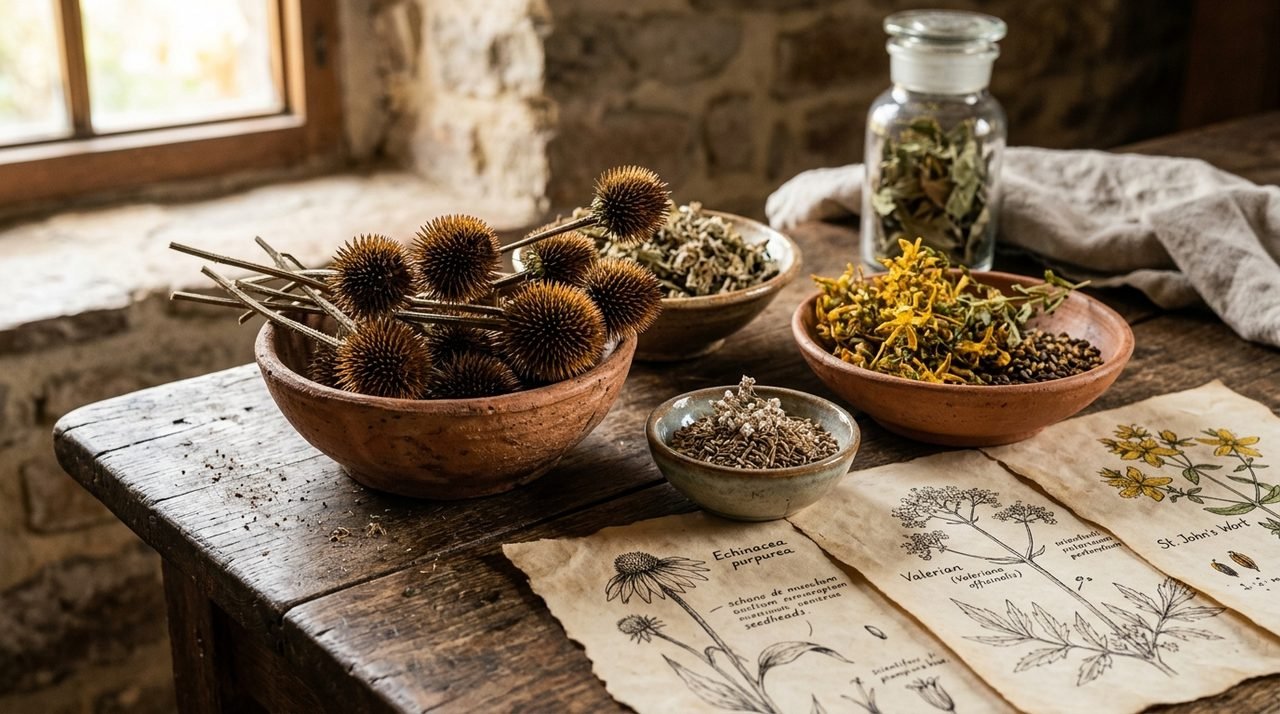
The cultivation of botanical medicinals—including purple coneflower (Echinacea purpurea and Echinacea angustifolia), valerian (Valeriana officinalis), and St. John’s wort (Hypericum perforatum)—connects modern pharmacognosy with ancient herbal medicine. Unlike domesticated garden vegetables that have been bred over millennia for rapid, uniform germination, medicinal herbs remain essentially semi-wild plants. Their seeds retain complex evolutionary dormancy adaptations designed to stagger germination over multiple seasons, ensuring that a single untimely drought or severe freeze does not wipe out an entire population.
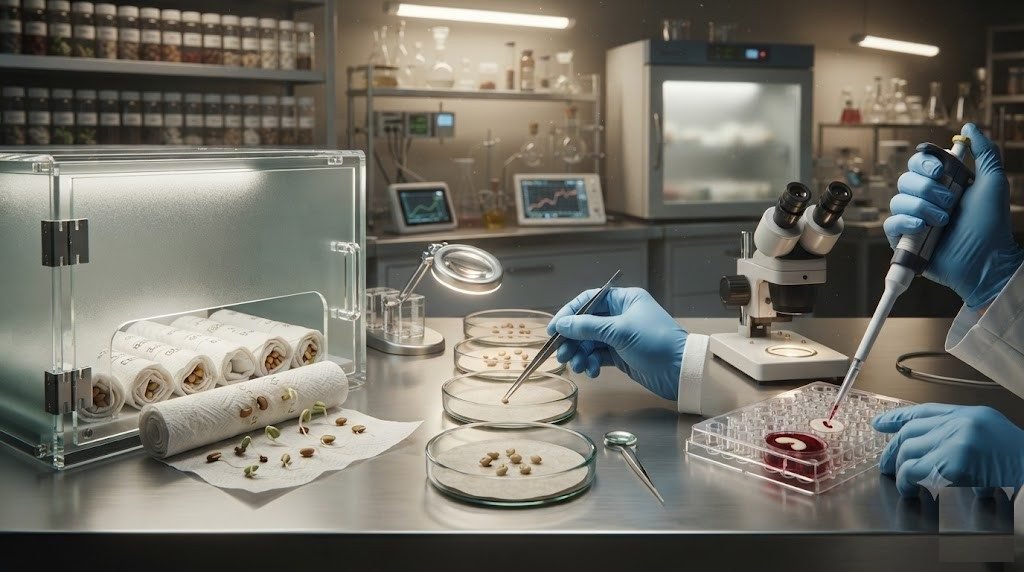
Successfully propagating medicinal herb seeds requires replacing simplistic direct sowing with specific botanical dormancy-breaking techniques: cold-moist stratification to break physiological embryo blocks, potassium nitrate (KNO3) or gibberellin priming to stimulate phytochrome systems, and precise light management.
🌱 The Echinacea Angustifolia vs. Purpurea Dormancy Contrast
While common purple coneflower (Echinacea purpurea) germinates readily with minimal intervention (typically requiring only 14 days of cold stratification or none at all), the highly prized medicinal narrow-leaved coneflower (Echinacea angustifolia) exhibits profound morphophysiological dormancy. Untreated E. angustifolia seeds rarely exceed 10% germination; achieving 80%+ emergence requires 60 to 90 days of moist cold chilling combined with alternating diurnal incubation temperatures (15°C night / 25°C day).
Dormancy Breaking Protocols for Elite Medicinal Herbs
Medicinal seed species exhibit distinct chemical and physiological dormancy mechanisms that dictate specialized pre-sowing treatments:
| Medicinal Herb Species | Primary Dormancy Classification | Recommended Pre-Treatment Protocol | Sowing Depth & Light Requirement |
|---|---|---|---|
| Echinacea purpurea (Purple Coneflower) | Shallow physiological dormancy. | 14 days moist cold stratification at 4°C; or 24-hr warm water soak. | Surface sow; press into soil; requires light (photoblastic). |
| Echinacea angustifolia (Narrow Coneflower) | Deep morphophysiological dormancy. | 60 to 90 days moist cold stratification at 2°C – 4°C in sterile sand. | Sow 3 mm deep; diurnal temperature cycling 15°C / 25°C. |
| Valeriana officinalis (Valerian) | Photoblastic light requirement; fleeting viability. | Zero chilling required; use fresh current-season seed exclusively. | Strictly surface sow; requires 100% direct light exposure to germinate. |
| Hypericum perforatum (St. John’s Wort) | Hard seed coat physical + physiological. | Soak in 0.2% potassium nitrate (KNO3) for 12 hours + 30 days cold chilling. | Surface sow; minute seeds require light and 22°C – 25°C ambient warmth. |
Chemical Priming with Potassium Nitrate and Ethylene Triggers
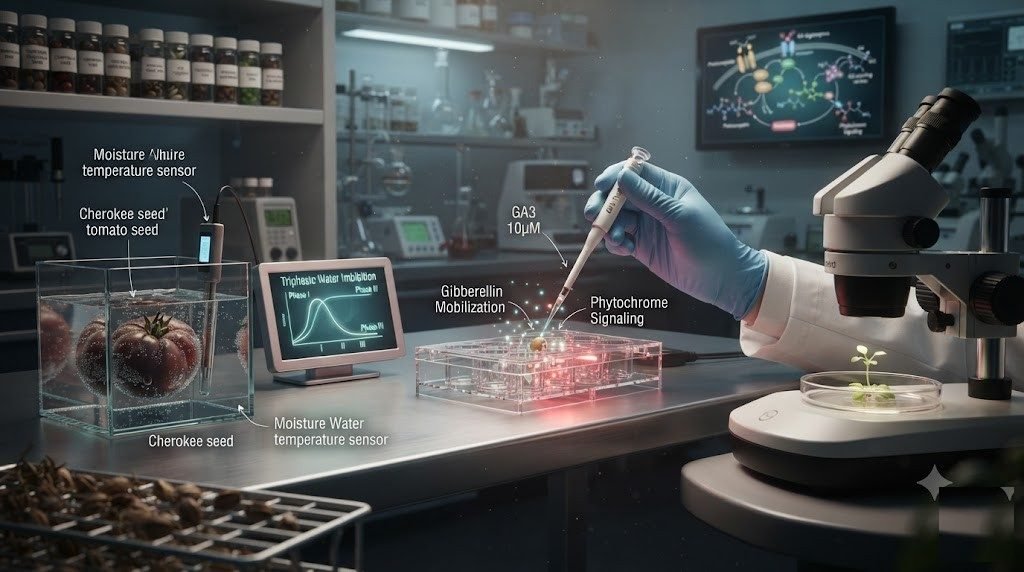
In conservation and commercial medicinal herb nurseries, agronomists utilize chemical priming agents to break recalcitrant dormancy without prolonged refrigerator storage. Soaking seeds in a 0.2% solution of potassium nitrate (KNO3) introduces nitrate ions (NO3–) that act as cellular signaling molecules, activating the pentose phosphate pathway and up-regulating gibberellin biosynthesis inside the embryo.
When combined with exposure to far-red and red light wavelengths, chemical nitrate priming triggers the phytochrome photoreceptor system (converting inactive Pr to active Pfr), stimulating the rapid production of endo-β-mannanase enzymes that weaken the micropylar endosperm, allowing the seedling radicle to break through the seed coat in less than half the traditional incubation time.
Endosperm Resistance and Embryo Morphophysiology in Echinacea
The seeds of purple coneflowers (Echinacea spp.) exhibit morphophysiological dormancy (MPD)—a dual-layer dormancy system where the embryo inside the mature seed is anatomically underdeveloped at dispersal, while the surrounding endosperm and seed coat exert strong mechanical and chemical inhibition. Sowing dry coneflower seeds into warm soil typically yields erratic, staggered emergence spanning 60 to 90 days, with overall viability rarely exceeding 20% to 30%.
During the required 30 to 60 days of moist cold stratification (3°C / 37°F), two distinct cellular processes unfold simultaneously:
- Embryo Differentiation: The rudimentary embryo absorbs stored lipids and starches from the endosperm, elongating its cotyledons and differentiating its vascular procambium tissue.
- Endosperm Weakening: Hydrated cells in the micropylar endosperm synthesize cell-wall hydrolase enzymes (specifically endo-β-mannanase and cellulase) that dissolve the rigid mannan polymers, lowering the mechanical puncture resistance of the seed cap to near zero.
🌱 Valerian (Valeriana officinalis) Fleeting Lipid Oxidation
Valerian seeds are equipped with a feather-like, umbrella pappus that facilitates wind dispersal across European meadows. Unlike coneflower seeds that maintain viability for 3 to 4 years, valerian seeds contain high levels of volatile monoterpenes and fragile polyunsaturated fatty acids. In standard storage, these lipids oxidize rapidly, and seed lots experience a 60% to 80% loss of germination capacity within just 12 months. Valerian must be sown using fresh current-season seed stocks exclusively.
Photoblastic Triggers and Hypericin Gland Synthesis in Hypericum
St. John’s wort (Hypericum perforatum) produces minute, cylindrical, pitted brown seeds measuring less than 1 mm in length. The seeds are obligately photoblastic: they require direct white light exposure containing a high red-to-far-red ratio to trigger the phytochrome system. Covering St. John’s wort seeds with even 2 millimeters of soil guarantees 100% dormancy and non-emergence.
Furthermore, St. John’s wort seeds respond dramatically to potassium nitrate (KNO3) priming. Soaking seeds for 12 hours in a 0.2% KNO3 solution prior to surface sowing stimulates the pentose phosphate pathway, bypassing traditional cold stratification and inducing uniform germination across 85% of seeds in 7 to 10 days at 22°C. As the seedling expands its first true leaves, dark pellucid dots become visible—the specialized multicellular glandular reservoirs that synthesize the antidepressant naphtodianthrone compound hypericin.
Herb Seed Quality Standards, Pharmacopoeia, and AOSA Rules
The harvesting, testing, and commercial trade of culinary and medicinal herb seeds are governed by dual agricultural and pharmaceutical regulatory frameworks. In North America and Europe, seed purity and baseline germination standards are codified by the Association of Official Seed Analysts (AOSA) and the International Seed Testing Association (ISTA). For medicinal botanical herbs, seed stocks are further subject to standards defined by the United States Pharmacopeia (USP) and the European Pharmacopoeia (Ph. Eur.), which establish strict limits for botanical authenticity, pesticide residues, heavy metals, and foreign plant matter contamination.
Because many wild and perennial medicinal herbs have naturally lower germination capacities than domesticated vegetable crops, statutory standards reflect distinct biological expectations:
- Certified Purity Standards: Herb seed lots must achieve minimum 98% pure seed by weight, with less than 0.5% inert matter and absolute zero tolerance for prohibited noxious weed seeds (such as field bindweed or dodder).
- Standard Germination Allowances: While vegetable seeds require 75% to 80% minimum certified germination, regulatory bodies permit lower commercial thresholds for challenging perennial herbs: 50% for lavender, 55% for rosemary, and 60% for Echinacea angustifolia.
- Genetic Authentication Testing: For medicinal herbs with closely related toxic look-alikes, modern botanical certifiers utilize DNA barcoding (sequencing the matK and rbcL chloroplast genes) to certify true species identity before commercial release.
Essential Oil Volatility, Moisture Equilibration, and Packaging
Aromatic herb seeds belonging to the Lamiaceae (mints) and Apiaceae (carrots) families present unique storage stability challenges due to their high concentrations of volatile essential oils. When exposed to heat and oxygen, volatile monoterpenes oxidize, generating reactive oxygen species (ROS) that attack embryo DNA. Seed bank curators store aromatic herb seeds in hermetically sealed glass vials or nitrogen-flushed foil envelopes at strictly controlled temperatures (4°C for medium-term working collections; -18°C for long-term genebanking).
| Herb Botanical Group | Primary Volatile Compounds | Storage Sensitivity | Preservation Packaging Protocol |
|---|---|---|---|
| Lamiaceae (Lavender/Rosemary) | Camphor, 1,8-Cineole, Linalool | Moderate volatility; oil oxidation causes coat hardening. | Hermetic glass jars with food-grade silica desiccant packets at 4°C. |
| Apiaceae (Dill/Fennel/Anise) | Anethole, Carvone, Phellandrene | Extreme fleeting viability; 50% vitality loss in 12 months. | Vacuum-sealed foil mylar pouches stored at -18°C freezer storage. |
| Asteraceae (Echinacea) | Alkamides, Cichoric Acid derivatives | Robust; seeds remain viable 3 to 4 years. | Airtight mason jars kept in cool, dark, dry storage room. |
| Valerianaceae (Valerian) | Valerenic acid, Isovaleric acid esters | Rapid lipid oxidation; fleeting 1-season viability. | Sow fresh within 6 months of harvest; do not store prolonged periods. |
Technical Frequently Asked Questions (FAQ)
Why do basil seeds form a gelatinous clear coat immediately upon watering?
The gelatinous halo that forms around a wet basil seed is a natural botanical phenomenon known as myxospermy. The outer epidermal cells of the seed coat contain dense pectin polysaccharides that expand instantly upon contact with water, creating a hydrophilic hydrogel that can absorb up to 40 times the seed’s weight in moisture. This mucilage serves as a biological survival sponge: in arid Mediterranean soils, it locks moisture around the seed embryo, prevents wind erosion by gluing the seed to soil particles, and facilitates gas exchange while inhibiting fungal spore penetration.
How does potassium nitrate (KNO3) help break dormancy in medicinal seeds?
Potassium nitrate (KNO3) acts as a powerful biochemical germination stimulant. In nature, wild seeds encounter nitrogen ions in animal droppings or fire-cleared soils, using nitrogen availability as an environmental signal that competition has been eliminated. Soaking seeds in a 0.2% KNO3 solution introduces nitrate ions that activate the pentose phosphate pathway inside the embryo, stimulating the transcription of gibberellin biosynthesis genes and down-regulating abscisic acid. This biological trigger bypasses weeks of cold stratification in species like Echinacea and Hypericum.
Why is parsley seed germination notoriously slow, and how can it be sped up?
Parsley seeds have an underdeveloped embryo that must finish maturing inside the seed coat after harvest, and the seed coat contains concentrated furanocoumarins and volatile oils that act as autotoxic chemical germination inhibitors. To accelerate germination from 28 days down to 7 to 9 days, soak parsley seeds in hot tap water (45°C to 50°C) for 24 hours, draining and replacing the water three times during the soak. This thermal priming washes away the water-soluble chemical inhibitors and hydrates the embryo, priming it for rapid emergence.
Can dill and fennel cross-pollinate in the garden, and what happens to the seeds?
Yes! While dill (Anethum graveolens) and fennel (Foeniculum vulgare) belong to separate botanical genera, they are closely related members of the Apiaceae family that share overlapping bloom times and chromosome counts. If planted within insect foraging distance (less than 200 to 300 meters) and allowed to flower simultaneously, bees will readily transfer pollen between them. The resulting hybridized seeds grow into plants with an unpalatable, muddled flavor—neither sweet anise-fennel nor clean tangy dill. Seed savers isolate them by at least 300 meters or stagger planting dates by a month.
Secondary Metabolite Biosynthesis and Stress-Induced Potency
In medicinal herb agronomy, a fascinating paradox exists: plants that are overly pampered with excessive irrigation and high-nitrogen chemical fertilizers produce lush, soft vegetative foliage that contains disappointingly low concentrations of therapeutic active compounds! In pharmacognosy, medicinal phytochemicals—such as the immune-modulating alkamides and cichoric acid in Echinacea, the sedative valepotriates in Valeriana, and the mood-elevating hyperforin in Hypericum—are synthesized by the plant as adaptive defensive responses to environmental stress.
When medicinal herbs are propagated from diverse open-pollinated seed stocks and cultivated in lean, mineral-rich soils under intense natural solar radiation with modest moisture deficits, the plants up-regulate their secondary metabolic pathways. Embryos that successfully navigate cold stratification and microbial soil pressures develop into robust adult plants with significantly denser glandular trichomes and higher concentrations of therapeutic secondary metabolites than pampering indoor monoculture could ever achieve.
Genetic Conservation of Endangered Native Medicinal Wildcrafts
Due to decades of unsustainable commercial wildcrafting (foraging from natural wild populations), wild native stands of narrow-leaved coneflower (Echinacea angustifolia), goldenseal (Hydrastis canadensis), and American ginseng (Panax quinquefolius) have faced severe ecological depletion across North America. SeedLibraryAI actively promotes the forest-farming and conservation cultivation of these endangered native medicinals from ethically sourced botanical seeds.
By mastering seed dormancy breaking, cold stratification, and woodland nursery bed preparation, home growers and agroforesters establish thriving ex situ conservation plantings. This domestic cultivation directly relieves destructive harvesting pressure on wild forest stands while ensuring that diverse genetic lines of these invaluable medicinal species remain preserved for future generations.
Seed-savers who document accession origins, regional soil types, and germination success rates contribute directly to participatory citizen-science conservation databases, strengthening grassroots medicinal biodiversity across North America and Europe. High-performance liquid chromatography (HPLC) testing confirms that organically seed-propagated heritage medicinal stands maintain superior therapeutic phytochemical profiles compared to industrially forced greenhouse clones.
In addition, maintaining detailed maternal plant field notes regarding frost survival, rhizome expansion rates, and flowering dates accelerates the development of hardy medicinal ecotypes. Over multiple growing seasons, this conscious selection fosters heritage herbal strains capable of flourishing without synthetic fertilizers or irrigation, cementing biological sovereignty for herbalists and community growers alike.