The propagation of pome fruits—encompassing domestic apples (Malus domestica), European pears (Pyrus communis), and Asian pears (Pyrus pyrifolia)—from botanical seed is a fascinating scientific journey that underpins both heritage orchard history and modern disease-resistant rootstock breeding. Unlike commercial orchard cloning where named cultivars are propagated via dormant branch budding or bench grafting, sowing pome fruit seeds introduces extreme genetic recombination, generating entirely unique individual seedling genetics with every pip.
However, growers attempting to sow fresh apple or pear seeds straight from a crisp supermarket fruit will find that zero percent of the seeds emerge. Pome fruit seeds are locked in a deep physiological state known as internal embryo dormancy (morphophysiological dormancy). Designed by temperate forest evolution, this dormancy mechanism prevents a seed from germinating inside an apple that falls to the ground in autumn, which would subject fragile green seedlings to certain death during freezing winter snows. Overcoming this block requires replicating the seasonal winter cycle through moist cold stratification.
🌱 The Physiological Gibberellin-to-ABA Ratio
At fruit harvest, pome seed embryos contain high concentrations of abscisic acid (ABA), a potent plant growth hormone that actively blocks DNA transcription and cell division in the embryo radicle. Prolonged exposure to moist, cold temperatures (2°C to 4°C / 35°F – 40°F) catalyzes the enzymatic breakdown of ABA while triggering the simultaneous biosynthesis of gibberellins (GA3 and GA4+7). Only when the endogenous gibberellin-to-ABA ratio crosses a critical threshold will the seed embryo awaken and push its radicle outward.
Moist Cold Stratification Protocol for Pome Seeds
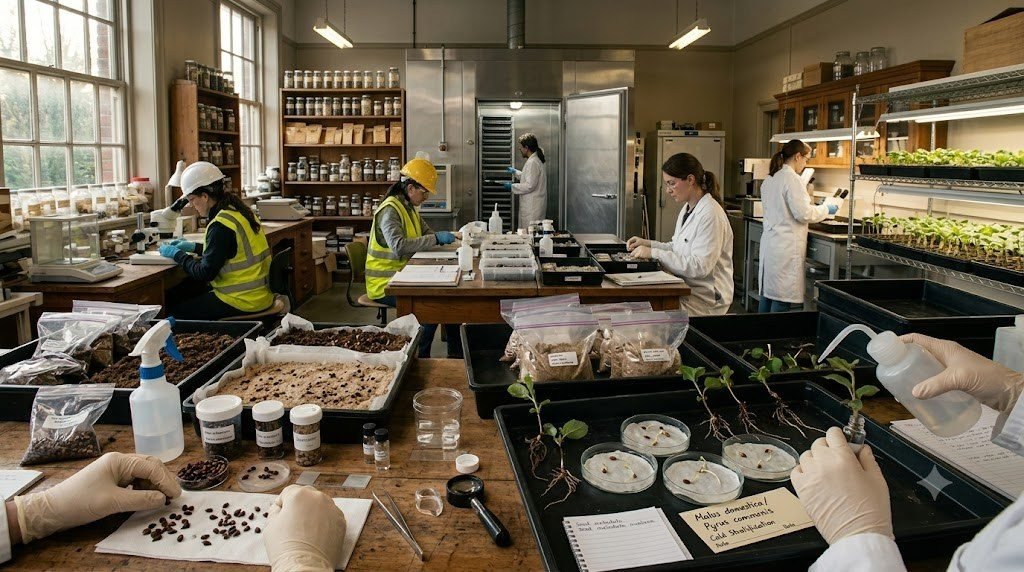
To achieve rapid, synchronized germination exceeding 85% emergence, seed propagators follow a controlled laboratory stratification protocol:
| Protocol Stage | Temperature & Moisture Parameters | Technical Procedure | Physiological Objective |
|---|---|---|---|
| Seed Extraction & Sanitation | Ambient room temp; 10% H2O2 bath for 10 min. | Scoop plump seeds from ripe fruit; soak in diluted hydrogen peroxide solution to kill surface molds. | Eliminates fungal spores (e.g., Botrytis) that could cause damp-off during prolonged cold storage. |
| Initial Imbibition | Room temperature water soak for 24 to 48 hours. | Submerge clean seeds in distilled water; discard hollow floating seeds. | Hydrates seed embryo to > 45% moisture content, activating internal metabolic enzyme pathways. |
| Stratification Medium Prep | Damp sterile peat moss or coarse horticultural vermiculite. | Moisten medium until it clumps without dripping when squeezed (‘wrung-out sponge’ consistency). | Provides continuous aerobic oxygen diffusion while preventing embryo desiccation. |
| Refrigerated Chilling | Strictly 2°C to 4°C (36°F – 39°F); darkness. | Seal seeds and medium inside perforated polyethylene ziplock bag; chill for 60 to 90 days (apples) or 90 to 120 days (pears). | Enzymatically degrades abscisic acid dormancy inhibitors across required chill-hour accumulation. |
| Radicle Emergence Sowing | 18°C to 22°C (65°F – 72°F); bright light. | Inspect weekly after day 60; sow germinated seeds with emerging white radicles 1 cm deep into deep pots. | Transfers actively growing seedling into well-aerated potting mix for rapid taproot elongation. |
Extreme Heterozygosity and Johnny Appleseed Genetics
Pome fruits are obligate outcrossers possessing self-incompatibility (SI) gene complexes that prevent a tree’s flowers from accepting its own pollen. Every single seed inside an apple is the product of cross-pollination from an adjacent crabapple or different apple cultivar. Because apples possess immense genetic heterozygosity, sowing seeds from a sweet ‘Honeycrisp’ will produce offspring spanning the full spectrum of wild apple traits: some seedlings will bear tiny astringent cider apples, others will yield tart culinary fruit, and a rare few may exhibit commercial table fruit quality.
For modern regenerative agroforesters and homesteaders, seedling pome trees offer profound biological advantages: seedling apples develop deep, anchor-like vertical taproots that confer extreme drought tolerance and windstorm resistance, far outliving shallow-rooted commercial dwarf clonal rootstocks by decades.
Biochemical Gibberellin Biosynthesis Pathways During Moist Chilling
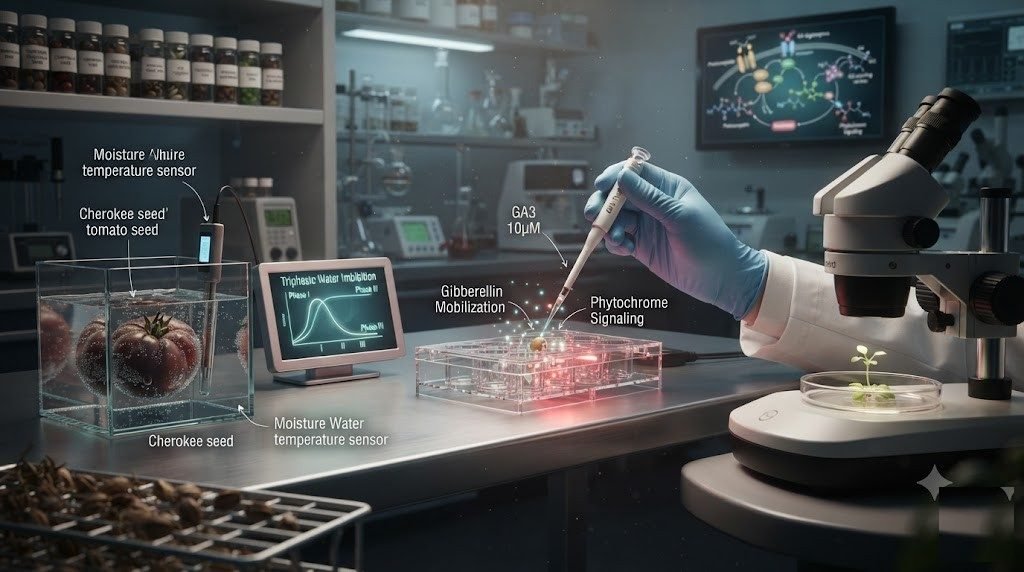
The release of morphophysiological dormancy in pome fruit seed embryos is a complex enzymatic process occurring inside the imbibed embryonic axis and cotyledons. During cold stratification (2°C to 4°C / 36°F – 39°F), cell hydration activates mitochondrial cytochrome respiration. The low temperature activates cytochrome P450 monooxygenase enzymes—specifically ent-kaurene oxidase and gibberellin 20-oxidase—which catalyze the biochemical synthesis of active gibberellins (GA1, GA3, GA4, and GA7).
These endogenous gibberellins migrate to the embryonic radicle tip, where they bind to GID1 (Gibberellin-Insensitive Dwarf 1) receptor proteins. This binding triggers the targeted degradation of DELLA repressor proteins via the ubiquitin-proteasome pathway. With DELLA repressors removed, transcription factors activate the production of expansin enzymes and xyloglucan endotransglucosylases that loosen and remodel the cellulosic primary cell walls of the radicle, allowing osmotic water pressure to drive physical cell elongation through the seed coat.
🌱 De-Stratification Hazards in Fluctuating Refrigeration
A critical physiological vulnerability in pome fruit seed stratification is thermal de-stratification (secondary dormancy induction). If chilling seeds are accidentally exposed to warm temperatures (> 15°C / 59°F) for more than 48 hours midway through their 90-day cold period, the accumulated biochemical chilling memory is erased! The embryo synthesizes fresh surges of abscisic acid, entering an even deeper secondary dormancy that requires starting the entire 90-day chill cycle over from day one.
Juvenility Physiology and the Transition to Floral Competence
When an apple or pear seed germinates, the resulting seedling enters a prolonged biological stage known as the juvenile phase. During juvenility, the seedling is physiologically incapable of initiating flower buds or setting fruit, regardless of pruning, fertilization, or environmental signals. The seedling focuses 100% of its energetic resources on rapid vertical apical growth, developing juvenile morphological traits: thorny lateral spurs, small lobed leaves, and smooth juvenile bark.
In seedling apples, the juvenile phase persists for 5 to 10 years, and in pears, up to 8 to 14 years. The transition to adult floral competence is governed by the gradual dilution of juvenile miRNAs (such as miR156) and the up-regulation of adult regulatory genes (such as SPL9). Pomological breeders accelerate this transition by grafting seedling scion wood into the high canopy of mature, fruiting trees, which delivers adult florigen hormones (FT protein) into the seedling tissue, inducing flowering in 3 to 4 years.
Rootstock Vigor and Fire Blight Resistance Screening
Seedling apple rootstocks (traditionally termed ‘Antonovka’ or ‘Standard Crab’ seedlings) produce colossal, long-lived orchard trees reaching 8 to 10 meters in height with root systems penetrating 3 to 5 meters into subsoil strata. Unlike clonal dwarfing rootstocks (such as M9 or M26) that require permanent trellising and supplemental irrigation, seedling rootstocks develop massive structural anchorage, extreme frost tolerance (-40°C soil survivability), and high tolerance to crown rot (Phytophthora cactorum).
Fruit Seed Propagation Standards, USDA Guidelines, and Rootstock Certification
The propagation of fruit trees and berry crops from botanical seed occupies a specialized niche within commercial pomology and agroforestry. Unlike commercial orchard scion varieties that are cloned via dormant budding or grafting to preserve specific dessert fruit characteristics, fruit seeds are propagated primarily for two essential agricultural purposes: the mass production of robust, deep-rooted seedling rootstocks, and the breeding of novel, climate-resilient cultivars. In the United States, fruit rootstock seed production complies with USDA-APHIS guidelines and the California Fruit Tree Rootstock Certification Program to ensure freedom from debilitating viral pathogens such as Prunus Necrotic Ringspot Virus (PNRSV) and Apple Mosaic Virus (ApMV).
Fruit seed testing follows specialized protocols established by the International Seed Testing Association (ISTA):
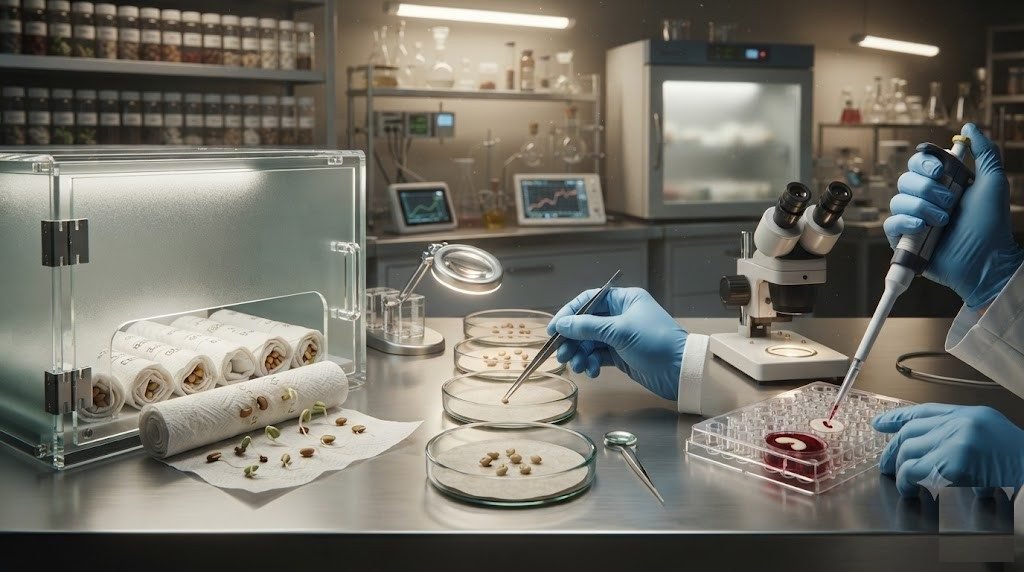
- Excised Embryo Testing: Because deeply dormant pome and stone fruit seeds require months of cold stratification before standard germination occurs, ISTA authorizes excised embryo assays. Technicians surgically remove the embryo from its seed coat and culture it on sterile moist blotters at 22°C: viable embryos green up and expand within 5 to 7 days, providing rapid viability confirmation.
- Tetrazolium Viability Verification: Pome and stone fruit embryos are bisected longitudinally and stained with 1% triphenyl tetrazolium chloride to evaluate mitochondrial dehydrogenase activity across the radicle axis and cotyledons.
- Sub-Zero Cold Tolerance Standards: Pome and stone fruit rootstock seed lots are certified according to their cold-hardiness zone compatibility, verifying genetic adaptation to winter ground freezes down to -35°C.
Biosecurity and Citrus Tristeza Virus (CTV) Quarantine Regulations
In citrus seed propagation, biosecurity regulations are extraordinarily stringent. Citrus Tristeza Virus (CTV) and the devastating bacterial disease Huanglongbing (HLB / Citrus Greening, vectored by the Asian citrus psyllid) have decimated commercial citrus groves across Florida and California. State departments of agriculture strictly prohibit the interstate transport or personal mailing of non-certified citrus seeds and budwood.
| Fruit Crop Group | Critical Quarantined Pathogen | Transmission Pathway | Mandatory Certification Protocol |
|---|---|---|---|
| Citrus (Oranges/Lemons) | Citrus Greening (HLB) / Citrus Tristeza (CTV) | Infected vegetative tissue and seed-coat sap. | Mandatory USDA-APHIS certified disease-free foundation mother blocks; thermotherapy. |
| Stone Fruits (Prunus) | Plum Pox Virus (Sharka / PPV) | Aphid vectors and seed transmission in wild Prunus. | ELISA testing of maternal parent trees; quarantine border inspections. |
| Pome Fruits (Apples/Pears) | Fire Blight (Erwinia amylovora) | Bacterial entry through floral nectaries into seed cavity. | Seed sanitation in 10% sodium hypochlorite or streptomycin wash. |
| Small Berries (Fragaria/Rubus) | Tomato Ringspot Virus (ToRSV) | Nematode vectors and pollen/seed transmission. | Foundation stock grown under insect-proof screenhouses in sterile soil media. |
Technical Frequently Asked Questions (FAQ)
Why don’t apple seeds grow into the exact same apple variety that was eaten?
Apples (Malus domestica) are extreme genetic heterozygotes. Every apple flower possesses self-incompatibility genes that prevent it from being fertilized by its own pollen; it must be cross-pollinated by an entirely different apple or crabapple tree. As a consequence of sexual reproduction and chromosomal recombination, the seeds inside a single Honeycrisp apple carry thousands of shuffled genes. Planting an apple seed will produce an entirely new, never-before-seen variety of apple. Only about one in 10,000 apple seedlings produces a fruit with commercial dessert quality; the vast majority yield tart, astringent, or hard apples historically prized for fermented hard cider or livestock feed.
How does a seed saver identify a nucellar citrus seedling from a sexual seedling?
In polyembryonic citrus seeds, multiple seedlings emerge from a single seed. Nucellar seedlings are asexual maternal clones: they inherit 100% of the mother tree’s genetics and display intense vegetative vigor, rapid upright growth, uniform green stems, and classic maternal leaf aromatics when crushed. By contrast, the single sexual (zygotic) seedling is often smaller, weaker, and may display variable leaf shapes, variegated foliage, or unusual spininess. Commercial rootstock nursery managers selectively cull the stunted or aberrant sexual seedlings, saving only the vigorous, identical nucellar clones.
Can stone fruit pits be planted directly outdoors in the autumn instead of using a refrigerator?
Yes, planting stone fruit pits outdoors in late autumn (October to November) is the traditional, natural method of propagation. Outdoor fall sowing allows natural winter snow, freezing rain, and soil freeze-thaw cycles to satisfy the seed’s cold stratification requirements (800 to 1,200 chill hours) in situ, while soil moisture and natural soil microbes slowly soften the lignified endocarp. However, outdoor seed beds must be protected with hardware cloth or heavy wire mesh buried 15 cm deep to prevent squirrels, chipmunks, and field mice from digging up and consuming the nutrient-dense kernels during winter.
What substrate is best for germinating acid-loving berry seeds like blueberries?
Blueberry (Vaccinium spp.) seeds require an extremely acidic, well-aerated, low-nutrient substrate with a pH strictly between 4.2 and 4.8. Standard potting soils (pH 6.2 – 6.8) contain excessive calcium and fertilizer salts that burn delicate blueberry root tips and induce fatal iron chlorosis. Propagators use 100% finely milled, unfertilized Canadian sphagnum peat moss moistened with distilled water or rainwater. Seeds are sown on the surface under bright fluorescent or LED grow lights and kept continuously moist using humidity domes and capillary bottom watering.
Seedling Taproot Geotropism and Agroforestry Carbon Sequestration
Unlike commercial clonal apple rootstocks (such as M9 or B9) that produce shallow, brittle, horizontally sprawling root systems requiring permanent wire trellising and supplemental drip irrigation, seedling pome trees exhibit powerful positive geotropism. The primary embryonic radicle drives straight downward, establishing an unbroken, vertical taproot that penetrates deep into subsoil fracture zones, tapping into subterranean water tables and deep mineral reserves.
In regenerative silvopasture and agroforestry systems, seedling standard apple and pear trees develop massive, hurricane-resilient structural canopies that survive for over a century, sequestering substantial carbon while yielding prolific annual crops of heritage cider fruit, livestock fodder, and non-spray culinary harvests.